
TouchDERMATOLOGY coverage from EADV2025:
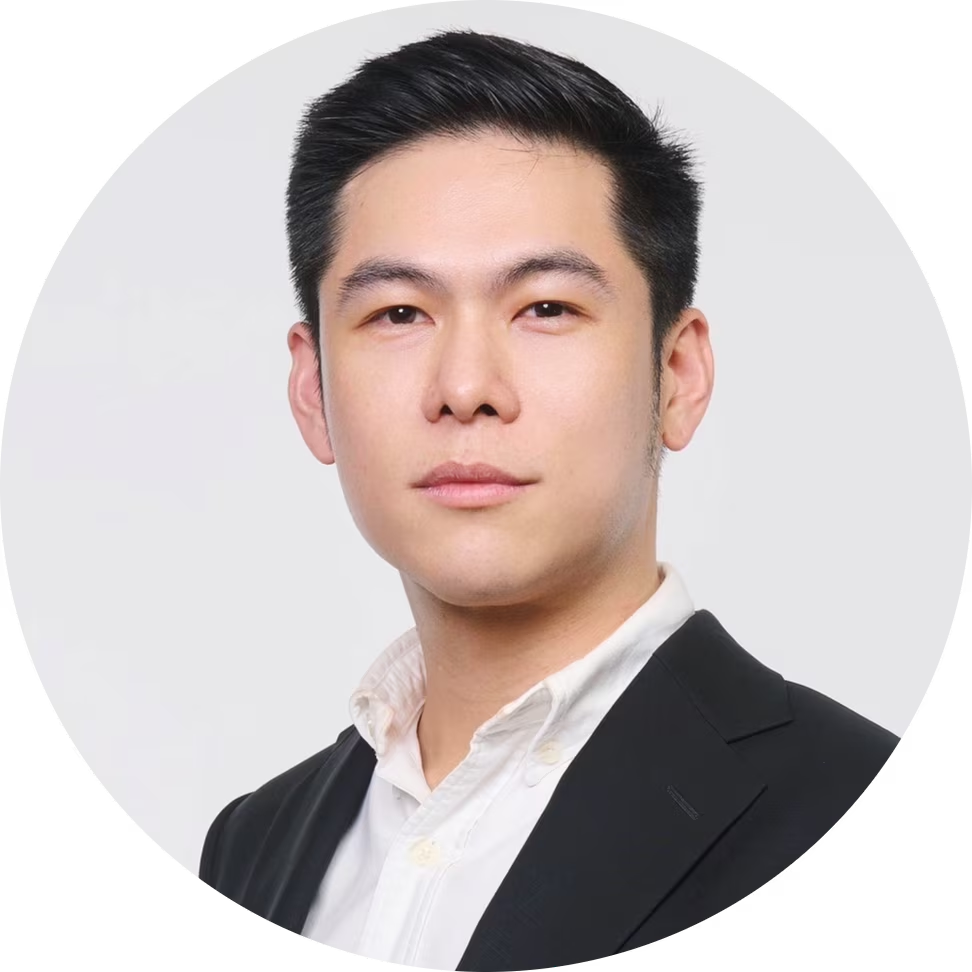
Following his presentation on LGBT Health in Dermatology at the European Academy of Dermatology and Venereology (EADV) Congress in Paris (17–20 September 2025), we spoke with Assistant Professor Teerapong Rattananukrom (Division of Dermatology, Department of Medicine, Faculty of Medicine Ramathibodi Hospital, Mahidol University, Bangkok, Thailand) about the importance of inclusive language, the unique dermatological challenges faced by LGBTQIA+ populations, particularly transgender individuals, and how dermatologists can address unconscious bias, advocate for equitable care and the importance of promoting greater representation of LGBTQIA+ populations in clinical research.
Q. Why is inclusive language so important when caring for transgender populations in dermatology?
I believe inclusive language helps communicate respect and recognition, particularly for the LGBTQIA+ community. Currently, many barriers exist within healthcare systems for this population, so it’s important to create a safe and supportive environment for them in all aspects of their care.
For example, I recommend using affirming language, such as patients’ chosen names and pronouns, and ensuring these are recorded in their medical documents so they can be addressed as they prefer. It also helps to begin with a warm, welcoming conversation to build trust and understanding, which ultimately supports providing the best possible treatment.
Q. What unique dermatological challenges do transgender populations face?
I’ll focus on transgender populations, because when individuals undergo gender transition, they may receive hormone therapy. After starting hormone treatment, their bodies begin to change to align with their gender identity. However, there can be side effects, particularly related to the skin.
For example, transgender men receiving testosterone may experience increased oil production in the skin, which can lead to acne, as well as the development of male-pattern hair loss. These effects can be distressing, so dermatologists should be familiar with how to manage such skin conditions.
For transgender women, hormone therapy with oestrogen or anti-androgens can cause dry skin and may contribute to female-pattern hair loss. Additionally, despite taking feminising hormones, many transgender women still have unwanted facial or body hair, which leads them to consult dermatologists for hair removal treatments. This is a common concern I see among transgender women in my clinical practice.
Q. How can dermatologists address unconscious bias and build trust with transgender populations?
I think awareness is the first step. Dermatologists should engage in self-reflection and training to recognise and address unconscious bias. This is very important because building a good relationship with patients helps you understand their needs and offer treatment options that best align with their preferences.
Of course, listening carefully and validating patients’ concerns also strengthens trust and helps build a positive and balanced therapeutic relationship.
Q. Why is it essential to include transgender populations and perspectives in clinical trials and research?
Currently, most research and published articles focus on cisgender populations. Conducting studies that include transgender individuals and the wider LGBTQIA+ community is therefore essential to address the specific needs of these groups.
For example, there are currently few guidelines or recommendations for managing skin problems that can occur after hormone therapy. By conducting research focused on these populations, we can better understand their unique dermatological issues and provide more informed, evidence-based care and treatment options.
Q. What steps can dermatologists take to advocate for more inclusive and equitable care?
I think every doctor, not only dermatologists, who works face-to-face with LGBTQIA+ patients has a responsibility to provide compassionate and informed care. Dermatologists can advocate for more inclusive and equitable care by integrating LGBTQIA+ health into medical education and training.
First, we need to understand how to manage skin conditions that arise after hormone therapy. If patients experience skin problems or undesirable effects from treatment, dermatologists should be prepared to advise them and provide appropriate management to support their gender-affirming journey, whether through therapy or surgery.
I also believe that gender equality is very important. Not every part of the world is fully open or accepting of LGBTQIA+ communities, but as healthcare professionals, we have a duty to treat every patient with respect and compassion, first and foremost as a human being, regardless of their gender or identity.
Further reading: Rutnin S, Suchonwanit P, Kositkuljorn C, Pomsoong C, Korpaisarn S, Arunakul J, Rattananukrom T. Characterizing Dermatological Conditions in the Transgender Population: A Cross-Sectional Study. Transgender Health. 2023 Feb 8;8(1):89-99. doi: 10.1089/trgh.2021.0105.
Disclosures: T Rattananukrom has nothing to disclose in relation to this interview.
This content has been developed independently by Touch Medical Media for touchDERMATOLOGY. It is not affiliated with the European Academy of Dermatology and Venereology (EADV). Views expressed are the speaker’s own and do not necessarily reflect the views of Touch Medical Media.
Cite: Rattananukrom T. How can we better support the LGBTQIA+ community in dermatology? TouchDERMATOLOGY. October 31, 2025
Editors: Gina Furnival.
More content from EADV 2025.
Related content
Latest updates in atopic dermatitis treatment and research, across all ages
Confronting the global rise of drug-resistant ‘super’ fungal skin infections
What’s new in epidermal differentiation disorders (EDDs)?