AAD

We are delighted to welcome Dr Brittany Dulmage as a touchDERMATOLOGY Future Leader 2026. Brittany Dulmage, MD, FAAD, is a US board-certified dermatologist and Associate Professor of Dermatology at The Ohio State University (OSU) Wexner Medical Center in Columbus, OH, USA. ...

We are delighted to announce Dr Anastasiya Muntyanu as a touchDERMATOLOGY Future Leader 2026. Based in Toronto, Canada, Anastasiya Muntyanu, MD, PhD, FRCPC, FAAD, is a Canadian and US board-certified dermatologist practising at the Women's College Hospital and the Princess Margaret ...

We are delighted to announce Dr Thy N. Huynh as a touchDERMATOLOGY Future Leader 2026, selected for her work helping to expand access to specialist care and clinical trials for children. We are delighted to welcome Dr Thy N. Huynh as ...

Dr Martina Porter joins the touchREVIEWS in Dermatology Editorial Board and reflects on the remarkable expansion of treatment options for hidradenitis suppurativa, from a once-overlooked disease area to one of rapid therapeutic development. She also shares her hopes for a future in which clinical features, patient history and biomarkers can help guide more personalized first-line treatment decisions.

Prof. Eleftheriadou reflects on what drew her to dermatology, the advances transforming patient care, and her hopes for more effective vitiligo treatment. “An effective treatment that could reliably halt disease progression and restore pigmentation would not only improve physical outcomes ...

Join us as leading experts discuss key data and perspectives from the late-breaking sessions at this year’s AAD meeting This March, experts from around the world gathered in Denver, Colorado, for the 2026 American Academy of Dermatology (AAD) Annual Meeting. ...

Povorcitinib, an oral, small-molecule selective JAK1 inhibitor, is currently being evaluated in phase 3 clinical trials for adults with moderate-to-severe hidradenitis suppurativa. At the 2026 AAD Annual Meeting, a late-breaking presentation reported 54-week efficacy and safety results from the programme. To explore the significance of these findings and their potential implications for clinical practice, we spoke with Dr Martina Porter.

Phase 2 findings support weight-based dosing and sustained efficacy through 52 weeks, with no unexpected adverse events in children aged 2-11 with moderate-to-severe atopic dermatitis. [touchplayvideo video_id="516mi7fd42"] TouchDERMATOLOGY coverage from AAD 2026: With four presentations exploring the use of nemolizumab ...
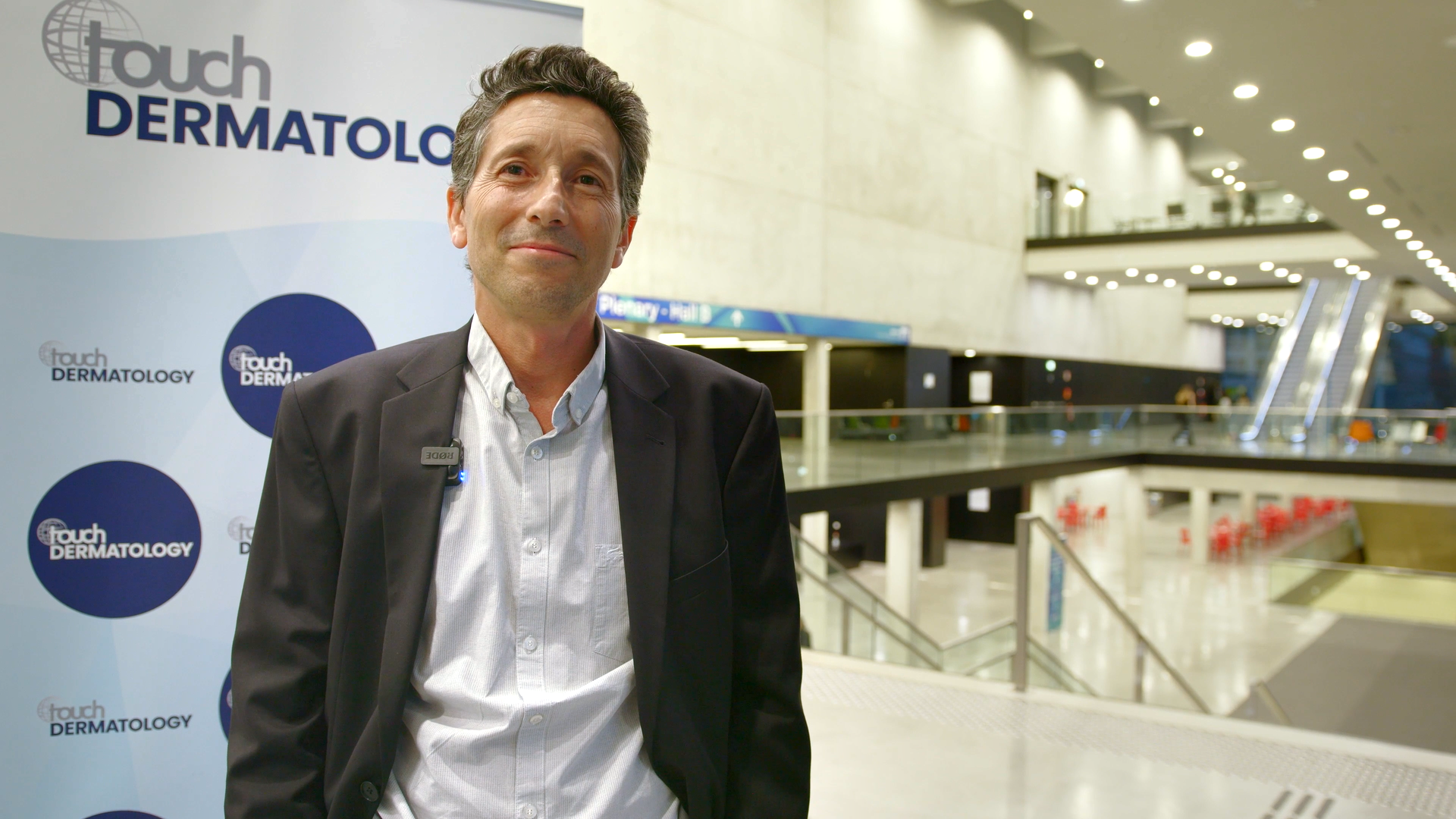
Prof. Thierry Passeron discusses key data from the upadacitinib Viti-Up studies, which provide the first strong Phase 3 evidence supporting a systemic treatment for non-segmental vitiligo. Results from the two parallel placebo-controlled studies showed that, by week 48, approximately 20% of patients treated with upadacitinib achieved T-VASI 50, compared with fewer than 6% in the placebo group, while around 25% achieved F-VASI 75 versus 6–7% with placebo. Prof. Passeron highlighted these findings as particularly important given the lack of approved systemic options for patients with extensive or active disease. He also noted that the studies demonstrated a favourable safety profile, with no new safety signals identified over 48 weeks, supporting upadacitinib’s potential role in the evolving treatment landscape for non-segmental vitiligo.

There was no shortage of activity in the inflammatory and autoimmune dermatology space at AAD 2026. To capture some of the most important advances, we spoke with Dr Raj Chovatiya, who highlights the key themes, data readouts and emerging therapies that stood out across several major disease areas.

Litifilimab has the potential to represent a major advance in the treatment of cutaneous lupus erythematosus, Prof. Victoria Werth tells TouchDERMATOLOGY, as new 24-week Phase 2 AMETHYST data presented at AAD 2026 highlight promising efficacy and tolerability.

Treatment options for androgenetic alopecia remain limited, fuelling interest in novel therapies that can deliver faster and more meaningful results. In this interview, Prof. Jerry Shapiro explores the challenges of current management and discusses the emerging potential of VDPHL01, an extended-release oral minoxidil formulation that may offer improved efficacy, tolerability and speed of response compared with existing options.

Envudeucitinib (ESK-001) represents a promising advance in psoriasis treatment, offering the prospect of a novel oral therapy with high levels of efficacy in a convenient form. This next-generation, highly selective oral tyrosine kinase 2 (TYK2) inhibitor was evaluated in the phase 3 ONWARD clinical programme — ONWARD1 (NCT06586112) and ONWARD2 (NCT06588738) — in adults with moderate to severe plaque psoriasis. To learn more about what sets this therapy apart from existing options, the findings from these studies, and what they could mean for the future of psoriasis management, we spoke with Dr Andrew Blauvelt (Blauvelt Consulting, LLC., Annapolis, MD, USA), who presented the ONWARD findings in a late-breaking session at the 2026 AAD Annual Meeting in Denver, Colorado, USA.

As interest continues to grow in better understanding the biology of skin aging, non-invasive tools such as tape stripping are opening up new possibilities for molecular research that may help identify strategies to slow skin aging and promote skin longevity. In this Q&A, Dr Helen He (New York, NY, USA) discusses her latest study, which was presented as a late-breaking abstract at this year’s AAD Annual Meeting, and the insights it offers into the mechanisms of skin aging and future targeted interventions.

In this interview, Dr Ben Kaffenberger discusses late-breaking Phase 3 data on vilobelimab for pyoderma gangrenosum, presented at AAD 2026. Building on promising Phase 2 results, the trial evaluates its efficacy in an indication with no approved treatments in the USA or Europe. These findings may mark an important step toward potential FDA approval and improved outcomes for patients with this severe disease.

New early-phase data on PH-762 presented at AAD 2026 have highlighted the promise of directed intratumoural immunotherapy in cutaneous carcinomas. In this Q&A, Dr Mary Spellman shares the key findings from the escalating-dose study and reflects on their potential implications for future development.

Founded by internationally recognised experts the IDS meeting brings together world leaders working across immune-activated skin conditions such as psoriasis, atopic dermatitis, alopecia areata, vitiligo and hidradenitis suppurativa. To capture key perspectives from the 2025 Summit, we spoke with editorial board member, Prof. Dedee Murrell, to bring you some of the key highlights from a selection of standout presentations delivered during the three-day event.

We often focus on clinical excellence, but spend less time developing broader skills that could help us better lead with purpose and build more fulfilling, impactful careers. In this episode, part of a mini-series in partnership with LEADderm, Dr Jennifer Soung and Denise Mann explore how clinicians can engage with the media to educate, empower and extend their impact beyond the clinic.

 touchDERMATOLOGY
Register Now!
Explore the latest in medical education and stay current in your field. Create a free account to track your learning.
- Save your progress for video
- Keep track of your CME credits
- Add personalised learning notes
- Receive updates from course leaders and faculty
- Be the first to hear about new and exciting interactive learning opportunities
Log into your Touch Account
Keep track of your clinical interests and newsletter subscriptions.
Sign up with an Email
Or use a .
Register now for FREE access
Already registered? Login below.
