
TouchDERMATOLOGY coverage from EADV 2025:
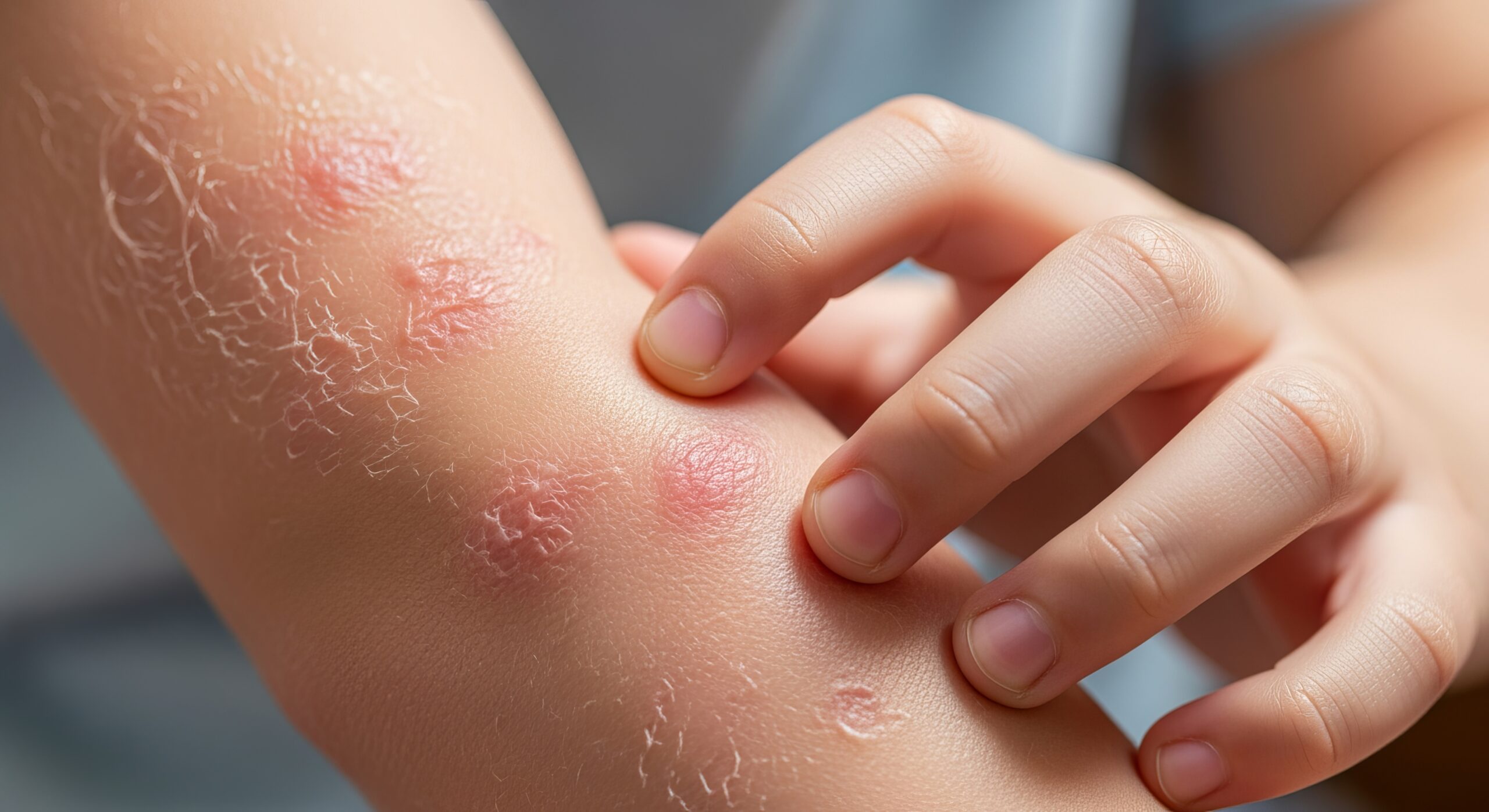
Drug-resistant fungal skin infections are an emerging global health concern, with cases increasingly reported across continents. These infections are more difficult-to-treat fungal, often require prolonged therapy, and are associated with higher rates of recurrence. To help address this growing problem, it is important to understand the factors driving resistance, explore potential solutions to limit the spread of these organisms and recognise the challenges involved in implementing effective control strategies.
To explore some of these factors, we spoke with Dr Olufolakemi Cole-Adeife (Lagos, Nigeria), who presented her research on this topic ‘Recalcitrant Fungal Skin Infections and Possible Links with Topical Corticosteroid and Antiseptic Misuse in Nigeria: A Case Series’ at the European Academy of Dermatology and Venereology (EADV) Congress 2025. In this discussion, Dr. Cole shares insights into her findings and the wider implications for clinical practice and public health.
Q. Could you summarise your study on resistant fungal skin infections and its key findings?
We are beginning to see drug-resistant or difficult-to-treat fungal skin infections more often in Nigeria. These cases have been reported around the world, in India, the USA and more recently in parts of Europe, so we felt it was important to document that we are seeing similar cases here in Nigeria.
What we found was that most of the patients with these very difficult or recalcitrant fungal infections were using topical steroid creams, and in particular were misusing them. In Nigeria, it is common to use a fixed-dose combination cream that contains a topical corticosteroid, an antifungal agent and an antibacterial agent combined. Usually, the steroid is a very potent one, such as clobetasol or betamethasone dipropionate, and patients are using these creams for weeks. The antibacterial component of the creams are also disrupting the normal skin microbiome, removing some of the healthy, protective flora. As a result, the combination creams are causing significant damage.
In addition to using a cream, many people in Nigeria believe that bathing with antiseptic solutions will also help prevent infections. However, this practice only further disrupts the skin microbiome, compromising its natural protective functions.
In our study, we found that people with fungal skin infections that were difficult-to-treat were using both fixed-dose combination, triple-action creams, and antiseptic solutions or soaps for bathing. The combined use of these products may be driving the emergence of highly resistant fungal strains, or ‘super fungi’, which are becoming increasingly difficult to treat.
During our analysis, we did identify Trichophyton mentagrophytes, although we are not certain whether it is the interdigitale genotype. Trichophyton indotineae is the strain that has been widely reported as resistant, and it is genetically and microscopically almost identical to T. mentagrophytes, distinguishable only through PCR. As we do not currently have access to PCR, we cannot confirm whether some of the isolates we are seeing are in fact T. indotineae. However, we have cultured T. mentagrophytes strains that have shown resistance to terbinafine, and in some cases, partial resistance to itraconazole.
In our poster, it was important to highlight this issue and to emphasise the urgent need for better education, stricter regulation and tighter control of these triple-action creams. Currently, they can be purchased easily from supermarkets without a prescription — they are inexpensive, readily available, and therefore widely misused, even when not medically indicated. Greater public education and stronger regulatory measures are essential to help curb misuse and limit the spread of resistant fungal skin infections, which we are now dealing with across the world.
The world is now a global village, with people constantly moving across borders. As a result, anything that affects people in one region can easily spread to other parts of the world. This is why a coordinated global approach is essential, particularly for skin conditions. We are increasingly seeing patients in Europe and the USA who have migrated from other regions presenting with these resistant infections. It is therefore crucial to highlight these issues and to develop programmes and policies that can effectively address them on a global scale
Q. What questions remain unanswered, and what future studies would you like to see?
In terms of our study, it would be valuable to conduct PCR analyses on these fungal isolates to determine whether T. indotineae is also present in Nigeria, as we currently lack the facilities to perform PCR locally. We are exploring the possibility of collaborating with mycology specialists in other parts of the world to send samples from Nigeria for molecular testing. This would be an important next step and could provide valuable insights into the epidemiology of resistant strains, which would be very interesting to report.
Disclosures: Dr Olufolakemi Cole-Adeife has received grant/research support from La Roche-Posay.
This content has been developed independently by Touch Medical Media for touchDERMATOLOGY. It is not affiliated with the European Academy of Dermatology and Venereology (EADV). Views expressed are the speaker’s own and do not necessarily reflect the views of Touch Medical Media.
Cite: Confronting the global rise of drug-resistant ‘super’ fungal skin infections. touchDERMATOLOGY. October 02, 2025
Editors: Gina Furnival & Victoria Jones