At the recent ILDS World Skin Summit, dermatology leaders from across the globe gathered to discuss the evolving role of skin health in global medicine. With dermatology now firmly recognized on the global health agenda, the summit provided a unique platform for cross-continental dialogue, collaboration, and reflection.
In this interview, Professor Olivier Gaide (Lausanne University Hospital, Switzerland) explores what makes the meeting distinct from traditional scientific congresses, outlines the key aims of this year’s summit, and reflects on major highlights such as the launch of the ILDS image gallery and the expansion of global training initiatives. The discussion also considers how these developments may influence clinical practice, particularly in the context of equity, evidence-based standards, and international collaboration.
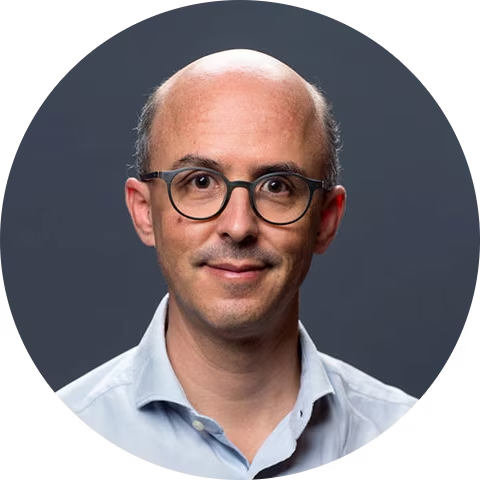
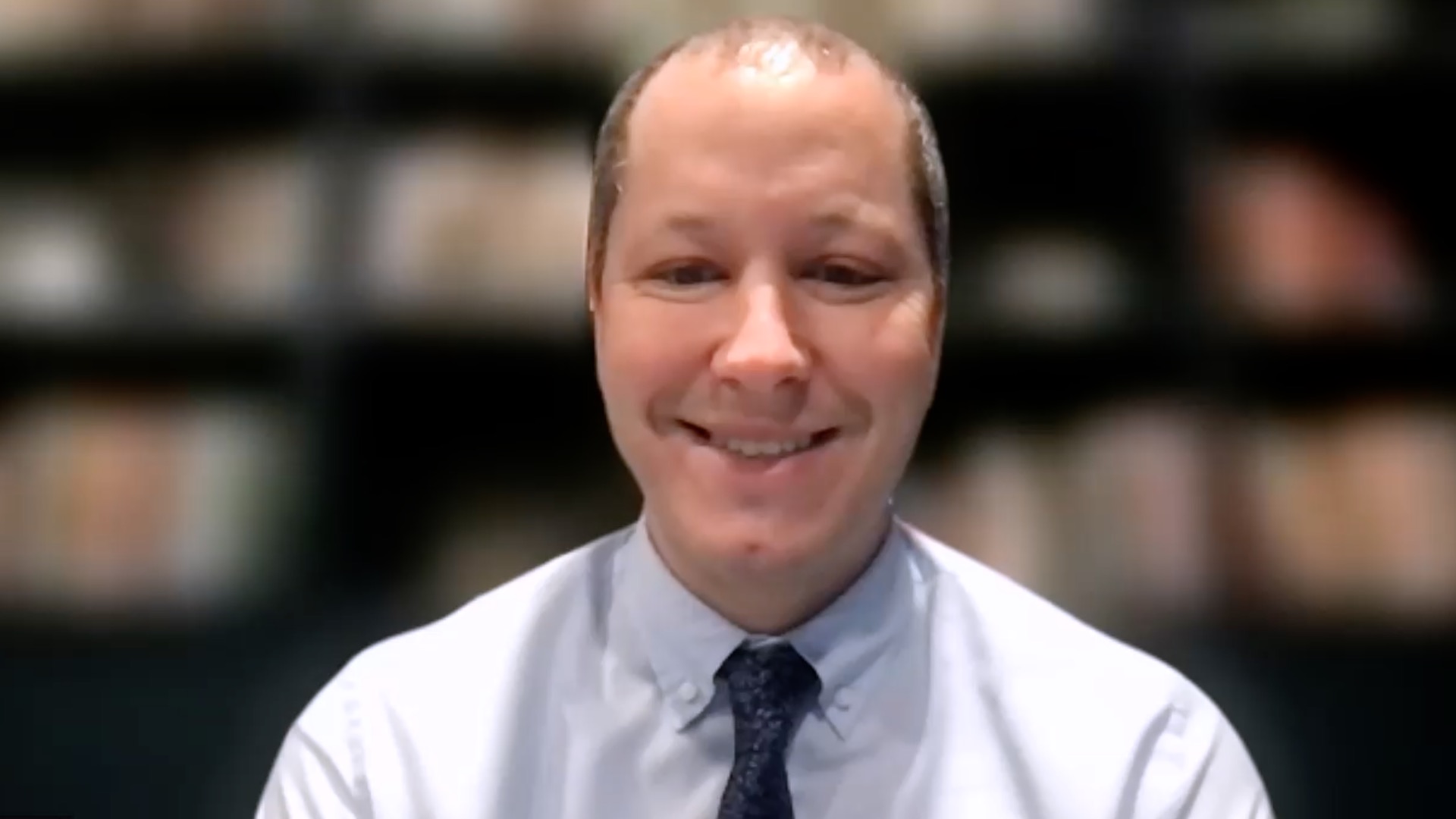
My name is Olivier Gaide. I’m a professor at Lausanne University Hospital, where I am responsible for the Centre of Excellence for Skin Cancer. I’m also President of the Swiss Society of Dermatology and Venereology.
One of the relatively unique aspects of the summit is that there are people attending from all over the world. A lot of people may go to scientific congresses, but usually there is a tendency to have people attend based on proximity or the ease of flying. For example, in some congresses in Europe, you’ll have a lot of people attend from Europe and the north part of Africa.
Here you really have representatives from all over the world, and they don’t get diluted by the presence of other members. The balance between participants from different continents is very interesting, because it leads to discussions which are much more open and much more focused on global health, rather than on the efficacy of a certain drug or the type of care recommended for patients. It’s much more focused on global health than other meetings.
The main aim was to build on the momentum that was created by the World Health Assembly’s decision to put dermatology on the map of global health. This was achieved in several ways. One was to introduce the field of dermatology as an important aspect of global health and the other one was to highlight drugs which are important in the field, for example drugs for psoriasis and products that protect from UV-induced skin damage.
The summit also aimed to send a clear signal to the leaders of different societies and associations, patient associations and the World Health Organization, to use this time to boost the activity of dermatologists worldwide in the field of global health.
There were also some very interesting spin-offs. One of them was the announcement of the opening of the ILDS gallery, and that is a huge effort to produce a gallery of skin disease images for teaching and research purposes. This is not restricted to white Caucasians, which is important given the over-representation of light skin colours in textbooks. Descriptions in the field of dermatology are usually based on findings in light skin, and this ILDS gallery is a great example of how we can unite to produce resources which are very important for teaching globally.
For me, one of the key highlights was clearly the ILDS gallery initiative, which is extremely important. Other highlights came from the working groups discussions. I couldn’t attend all the working groups, but they were all reported back on. What was interesting at this meeting was the broader perspective, in terms of how decisions in one country can influence the way dermatology is practiced in another country, and how we can try to bridge countries to reduce disparities in access to care, treatments, and specialists. The organization of regional skin training centres is another highlight; there’s a training centre in Tanzania, but there are new training centres opening and one of them is in the Oceania region. Dermatologists can really change the paradigm, previously everyone would focus on their own countries, so if you were active in Switzerland, you would only teach people in Switzerland and this is changing.
The impact on clinical practice is limited in countries which are very wealthy. What is important is the realization that some of the constraints that we put on ourselves because we can are unnecessary. In the group that was talking about surgery with limited resources we realized that there is a tendency in western countries to have strict sterilization practices, which sets a precedence. These standards are not always attainable in countries with less wealth and are not always based on science. There is a need to focus more on evidence-based medicine in this respect and not just doing things because resources allow. We should think more broadly, and I fear that we are setting aims which are not reasonable in a global health setting and this is something that we should change in our clinical practice. There should be a real effort to set time aside for teaching and research collaborations with countries that are not as wealthy.
Already registered? Login below.
About Prof. Olivier Gaide
Prof. Olivier Gaide is a dermatologist advancing the field through his expertise in skin cancer detection and innovative therapeutic approaches. Based at Lausanne University Hospital, he leads the Excellence Centre for Melanoma and skin cancer. His research focuses on non-invasive imaging for the early detection of skin cancer and the cutaneous effects of electromagnetic waves, including radiotherapy. Prof. Gaide has published more than 80 papers in leading journals such as Nature Immunology, Nature Medicine, and The Lancet.
More content in dermatological disorders.
Cite: From global health to clinical practice: Key takeaways from the ILDS World Skin Summit. touchDERMATOLOGY. December, 2025.
Disclosures: Olivier Gaide discloses that Lausanne University Hospital received a grant from Torqur AG to conduct the clinical study. His salary is fully funded by Lausanne University Hospital (CHUV), and neither he or his immediate family members hold shares in any pharmaceutical companies. Fees for advisory boards, conferences and studies are collected by Lausanne University Hospital from Sanofi, Janssen-Cilag, Novartis, Roche, Almirall, Widmer, Galderma, L’Oréal, Takeda, Leo, Bristol Myers Squibb and Pierre Fabre. Dr Gaide has also received congress travel support from Pierre Fabre.
This content has been developed independently by Touch Medical Media for touchDERMATOLOGY. It is not affiliated with the International League of Dermatological Societies (ILDS). Views expressed are the speaker’s own and do not necessarily reflect the views of Touch Medical Media.
Related content

- What had us talking in 2025: 8 defining developments in dermatology
- Expert insights from EADV 2025: Translating evidence into dermatology practice
- Confronting the global rise of drug-resistant ‘super’ fungal skin infections
Register now to receive the touchDERMATOLOGY newsletter!
Don’t miss out on hearing about our latest articles, expert opinions, conference news, podcasts and more.