
REZOLVE-AD results, published in The Lancet, show the regulatory T-cell-inducing biologic improved EASI and itch scores across all three doses.
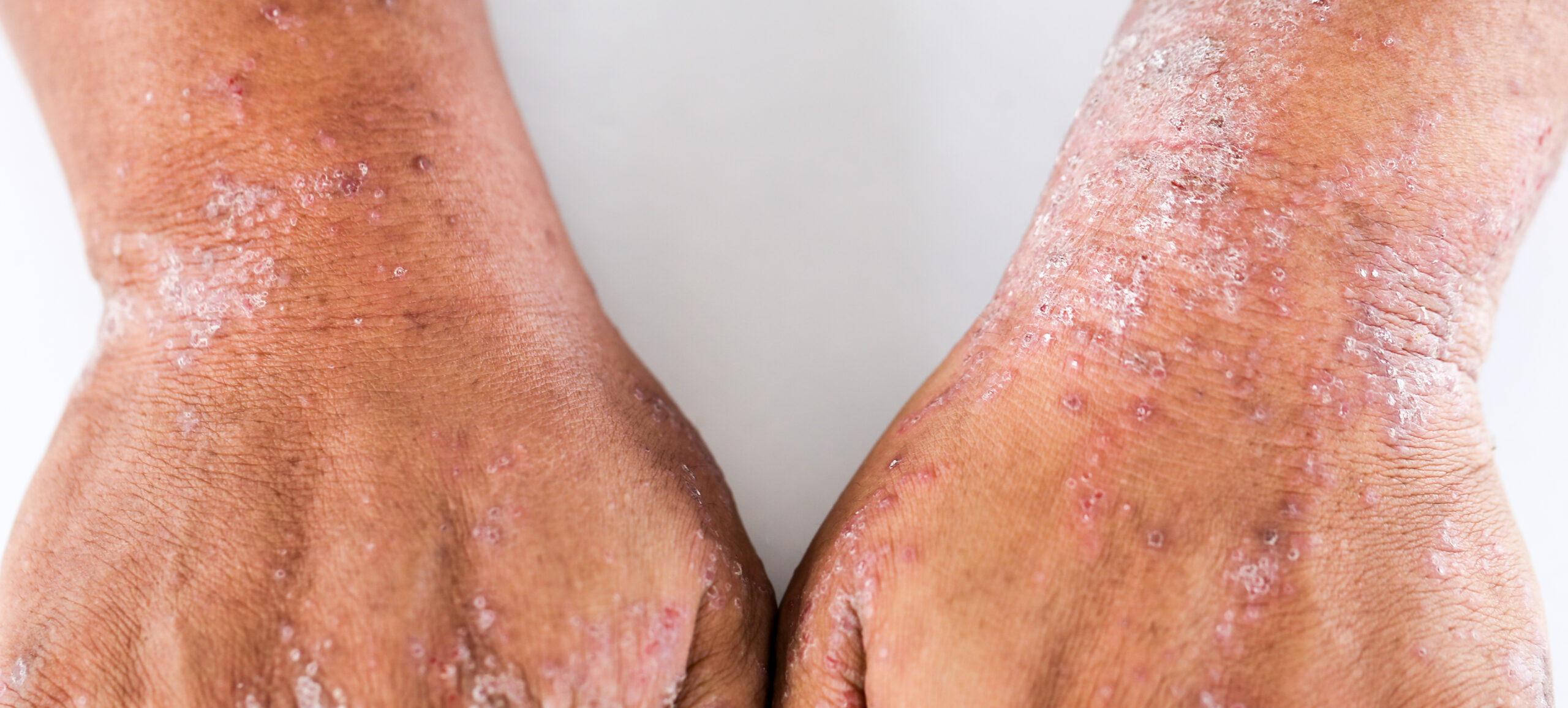
On August 25, 2026, Nektar Therapeutics announced that full peer-reviewed results from REZOLVE-AD (NCT06136741), a phase 2b, randomized, double-blind, placebo-controlled study of rezpegaldesleukin in adults with moderate-to-severe atopic dermatitis, had been published in The Lancet.1,2
Rezpegaldesleukin is an investigational, first-in-class regulatory T-cell (Treg)-inducing biologic that binds the interleukin-2 (IL-2) receptor complex, designed to selectively expand and enhance the function of Tregs. This approach is intended to restore immune balance upstream of the cytokine-blocking mechanisms targeted by current biologics and JAK inhibitors, rather than directly suppress inflammatory signaling. Rezpegaldesleukin has received US FDA Fast Track designation for atopic dermatitis and, separately, for alopecia areata.1
REZOLVE-AD enrolled 393 biologic- and JAK inhibitor-naive adults with moderate-to-severe atopic dermatitis across 107 sites in 10 countries between November 2023 and January 2025.2 Trial eligibility required an Eczema Area and Severity Index (EASI) score of at least 16.0, a validated Investigator Global Assessment for Atopic Dermatitis (vIGA-AD) score of at least 3, and at least 10% affected body surface area. Those enrolled were randomized to subcutaneous rezpegaldesleukin 24 μg/kg every 2 weeks (n=104), 18 μg/kg every 2 weeks (n=106), 24 μg/kg every 4 weeks (n=110), or placebo (n=73) for a 16-week induction period.2
Don’t miss out on hearing about our latest peer-reviewed articles, expert opinions, conference news, podcasts and more.
Rezpegaldesleukin improves EASI across all three dosing regimens
All three dosing regimens met the primary endpoint of percentage change from baseline in EASI at Week 16. Mean EASI reductions were:
- 61% with 24 μg/kg every 2 weeks (p<0.0001)
- 58% with 18 μg/kg every 2 weeks (p<0.0001)
- 53% with 24 μg/kg every 4 weeks (p=0.0002)
- 31% with placebo.2
Significant improvements in EASI were seen from Week 2 in the 24 μg/kg groups and from Week 4 across all rezpegaldesleukin groups, with responses continuing to improve through Week 16.1 Treatment effects were consistent in patients with both moderate (vIGA-AD score of 3) and severe (vIGA-AD score of 4) disease at Baseline.1
Secondary endpoints support improvements in skin clearance and itch
Key secondary outcomes with the highest dose versus placebo included:
- EASI-75: 42% vs 17%
- EASI-90: 25% vs 9%
- vIGA-AD 0/1: 20% vs 8%
- ≥4-point improvement in Itch NRS: 42% vs 16%
- Reduction in affected BSA: 54% vs 17%.1
Among patients with severe itch at Baseline (Itch NRS score ≥7), response rates reached 54% and 49% for the 24 μg/kg every-2-weeks and 18 μg/kg every-2-weeks groups, respectively, compared with 24% with placebo.1
Rezpegaldesleukin also significantly improved patient-reported outcomes at Week 16. With the 24 μg/kg every-2-weeks regimen, 72% of patients achieved a ≥4-point improvement in Dermatology Life Quality Index (DLQI), compared with 54% with placebo. Improvements were also reported in atopic dermatitis control (ADCT; 67% vs 35%), pain (Pain NRS; 45% vs 22%) and sleep disturbance (ADSS item 1; 57% vs 30%), with all comparisons favoring rezpegaldesleukin.1
Safety profile remains consistent with previous studies
According to Nektar Therapeutics, the safety profile during the 16-week induction period was consistent with previous studies of the agent.1 Treatment-emergent adverse events were reported in at least 5% of rezpegaldesleukin-treated patients (pooled across the three active groups; n=320) and more frequently than with placebo (n=73) included injection-site reactions (70% vs 4%), eosinophilia (8% vs 3%), pyrexia (6% vs 3%), headache (6% vs 4%), upper respiratory tract infection (6% vs 5%), and arthralgia (5% vs 1%).2
More than 99% of injection-site reactions were mild to moderate in severity and resolved. Serious adverse events occurred in 2% of patients. No deaths were reported, and no increased risk of infections or conjunctivitis was observed.1
“These results represent the first large, randomized, placebo-controlled trial to demonstrate that selectively expanding regulatory T cells can translate into clinically meaningful improvements across both physician-assessed and patient-reported outcomes in patients with atopic dermatitis,” said Jonathan I. Silverberg, MD, PhD, MPH, Professor of Dermatology at George Washington University School of Medicine and Principal Investigator of the REZOLVE-AD study.1
Phase 3 ZENITH AD program underway
Nektar Therapeutics has selected the 24 μg/kg every-2-weeks induction regimen, followed by monthly or quarterly maintenance dosing, for its phase 3 ZENITH AD program.1 The program comprises three placebo-controlled trials, ZENITH AD-1, ZENITH AD-2, and ZENITH AD-3, with a planned combined enrollment of 1,530 patients aged 12 years and older.1,3 The first two trials, in treatment-naive patients, began in July 2026. A third trial, in patients with prior systemic biologic and/or JAK inhibitor experience, is planned to start in September 2026, according to the company.3
Topline phase 3 data are not expected before mid-2028.3 Results from the REZOLVE-AD maintenance period through Week 52 and from the phase 2b REZOLVE-AA study in alopecia areata are also awaited.1 A registrational phase 3 trial of rezpegaldesleukin in alopecia areata is planned for early 2027.1
References
- Nektar Therapeutics. (August 25, 2026). Nektar announces publication in The Lancet of positive phase 2b REZOLVE-AD 16-week induction results of rezpegaldesleukin in moderate-to-severe atopic dermatitis [Press release]. biospace.com/press-releases/nektar-announces-publication-in-the-lancet-of-positive-phase-2b-rezolve-ad-16-week-induction-results-of-rezpegaldesleukin-in-moderate-to-severe-atopic-dermatitis
- Silverberg JI, Rosmarin D, Bieber T, et al. Rezpegaldesleukin treatment of moderate-to-severe atopic dermatitis (REZOLVE-AD): final results from the 16-week induction period of an international, double-blind, placebo-controlled, randomised phase 2b study. Lancet. 2026; published online August 21. doi: 10.1016/S0140-6736(26)01143-8
- Nektar Therapeutics. (July 21, 2026). Nektar Therapeutics announces start of phase 3 ZENITH AD program evaluating novel regulatory T-cell biologic rezpegaldesleukin in moderate-to-severe atopic dermatitis [Press release]. prnewswire.com/news-releases/nektar-therapeutics-announces-start-of-phase-3-zenith-ad-program-evaluating-novel-regulatory-t-cell-biologic-rezpegaldesleukin-in-moderate-to-severe-atopic-dermatitis-302830206.html
Cite: Rezpegaldesleukin shows promising phase 2b results in atopic dermatitis. touchDERMATOLOGY. September 1, 2026.
Disclosure: This content has been developed independently by Touch Medical Media for touchDERMATOLOGY, utilizing AI as an editorial tool (Claude (Sonnet 5) [Large language model] https://claude.ai). No funding was received in the publication of this article.
Editor: Gina Furnival, Head of Content
SIGN UP to TouchDERMATOLOGY!
Join our global community today for access to thousands of peer-reviewed articles, expert insights, and learn-on-the-go education across 150+ specialties, plus concise email updates and newsletters so you never miss out.