TouchDERMATOLOGY coverage from EADV 2025:
Type IIb autoimmune chronic spontaneous urticaria (CSU) is a distinct endotype of CSU in which symptoms are thought to be driven by pathogenic IgG autoantibodies, most commonly targeting the high-affinity IgE receptor (FcεRI) or IgE itself, and often accompanied by thyroid autoantibodies such as anti-thyroid peroxidase (TPO) or anti-thyroglobulin (TG). Patients with this form of disease typically experience more severe and treatment-refractory symptoms compared with non-autoimmune CSU, and are frequently identified through a positive Chronic Urticaria Index (CUI) test or other functional assays.
Remibrutinib is a recently approved oral Bruton’s tyrosine kinase (BTK) inhibitor for CSU that has shown superior efficacy over placebo and a favourable safety profile in the pivotal phase 3 REMIX-1 (NCT05030311) and REMIX-2 (NCT05032157) trials. By inhibiting BTK, a central mediator of B-cell signalling and autoantibody production, remibrutinib may not only provide symptom relief and improves quality of life for patients with CSU, but could potentially modify the underlying disease mechanisms in autoantibody-positive patients and influence the long-term course of the condition.
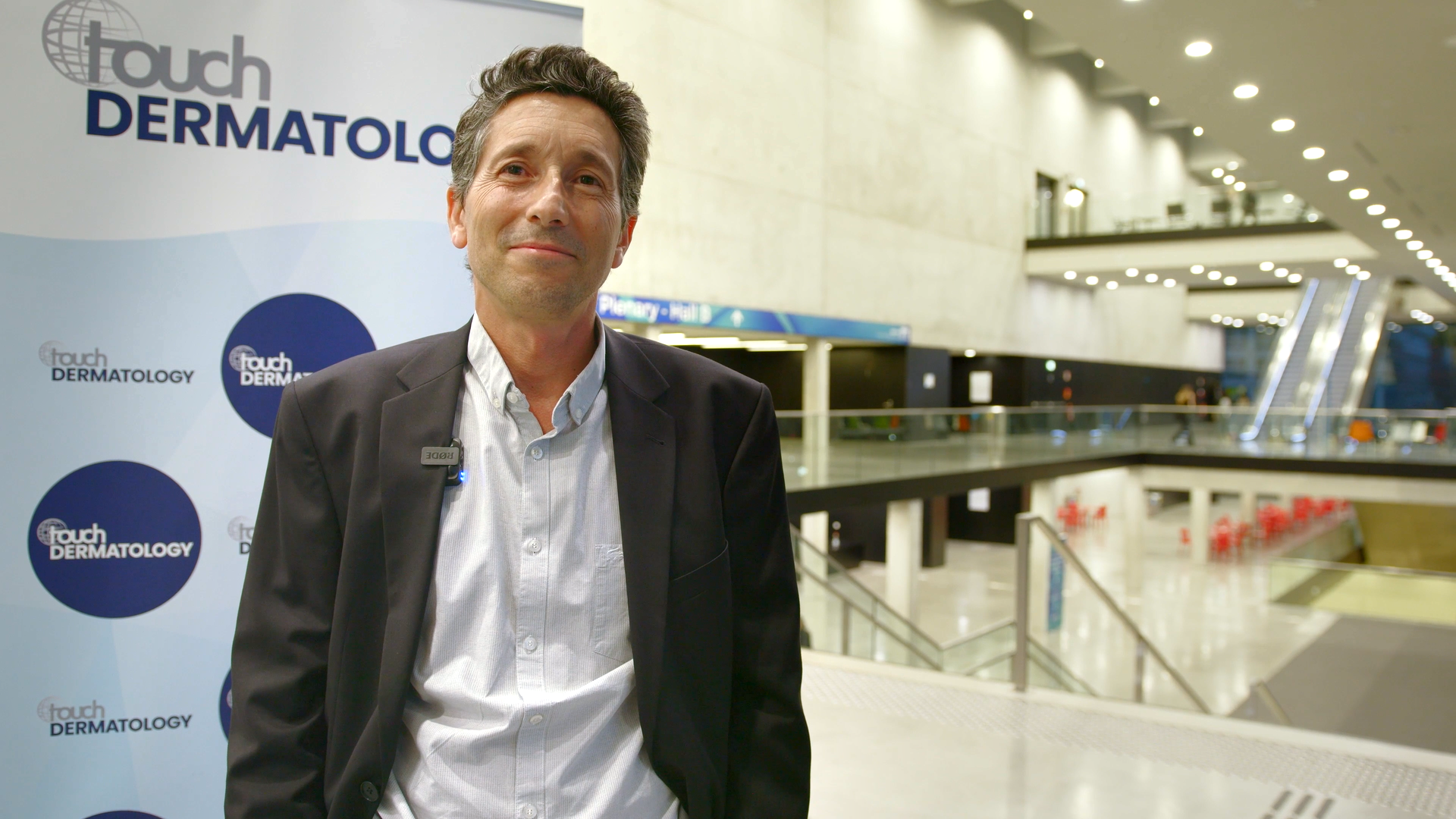
At the European Academy of Dermatology and Venereology (EADV) Congress 2025 in Paris, France, we had the pleasure of speaking with Prof. Martin Metz (Berlin, Germany), who presented new data on the immunomodulatory effects of remibrutinib. In our interview, Prof. Metz discusses the latest insights, explores how these findings could shape future clinical practice and reflects on the key questions that remain as research in this area continues to evolve.
Questions
- What was the rationale for studying remibrutinib’s effect on autoantibody levels in CSU?
- How was the study conducted and which biomarkers were measured?
- What were the key findings from the analysis?
- What is the potential significance of these results for clinicians managing refractory CSU?
- What questions remain, and what future studies are planned?
About Prof. Martin Metz
Prof. Martin Metz is is Professor in the Department of Dermatology and Allergology at Charité – Universitätsmedizin Berlin, Germany where he leads translational research and serves as Deputy Head of Clinical Trials. He is also Head of Preclinical Research on mast cell–mediated diseases at the Fraunhofer Institute for Translational Medicine and Pharmacology and Vice President of the German Pollen Information Service Foundation (PID). Dr Metz’s research focuses on pruritus and the pathogenesis and management of urticaria. He has authored more than 220 peer-reviewed publications in leading journals including The Lancet, The New England Journal of Medicine, Nature and Science.
Disclosures: Prof. Martin Metz has served on advisory boards, and received honoraria from, Novartis.
This content has been developed independently by Touch Medical Media for touchDERMATOLOGY. It is not affiliated with the European Academy of Dermatology and Venereology (EADV). Views expressed are the speaker’s own and do not necessarily reflect the views of Touch Medical Media.
Cite: Remibrutinib: New data demonstrates compelling immunomodulatory effects in CSU. October XX, 2025
Editors: Gina Furnival.
More content in urticaria.
Related content
Ligelizumab for the treatment of chronic spontaneous urticaria
Breaking news ground in CSU treatment: Highlights from EAACI 2024