
touchDERMATOLOGY coverage from EADV 2025:
For patients with moderate-to-severe plaque psoriasis (PsO), high efficacy with a favourable safety profile is generally only achieved with injectable therapies.
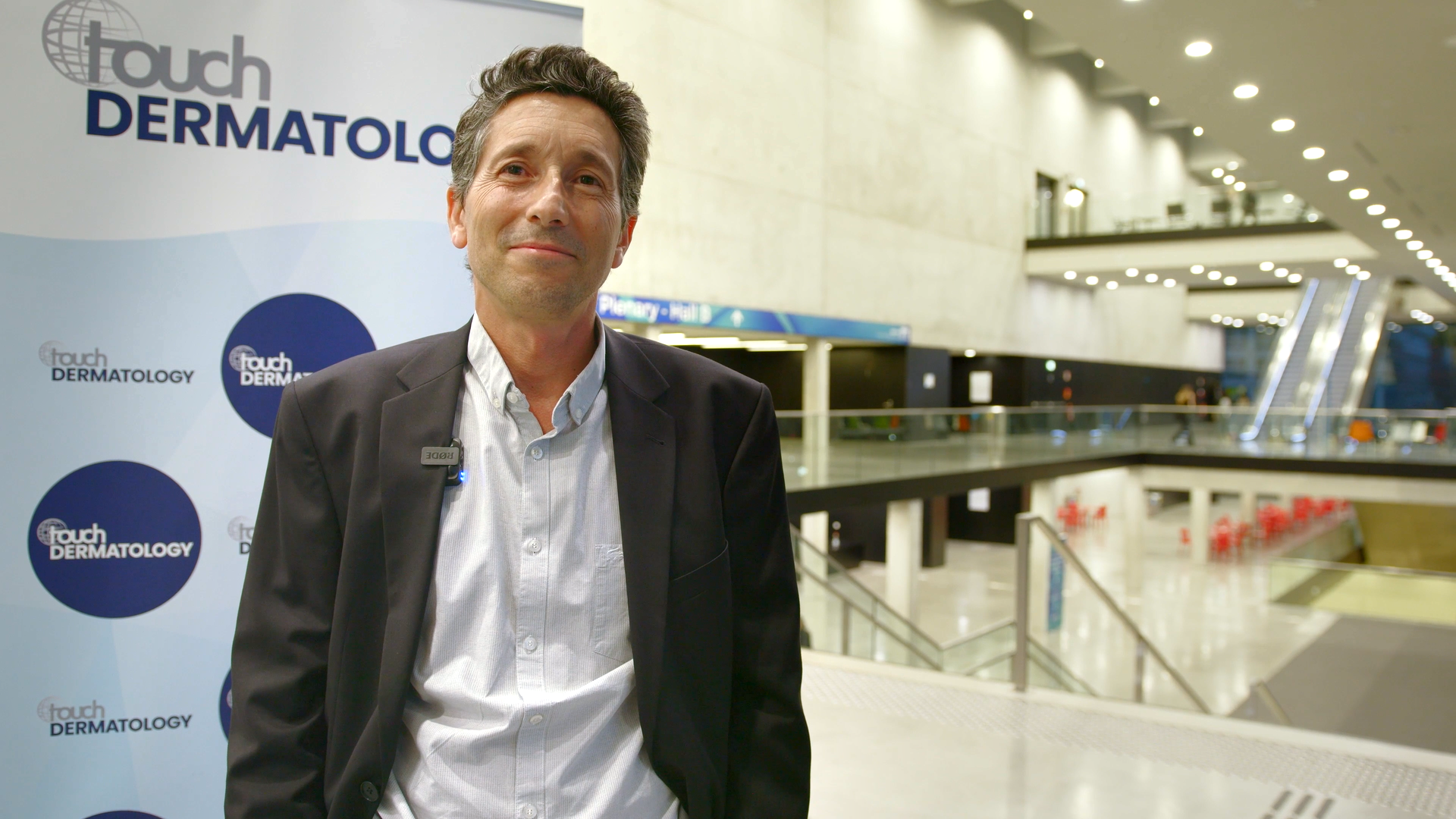
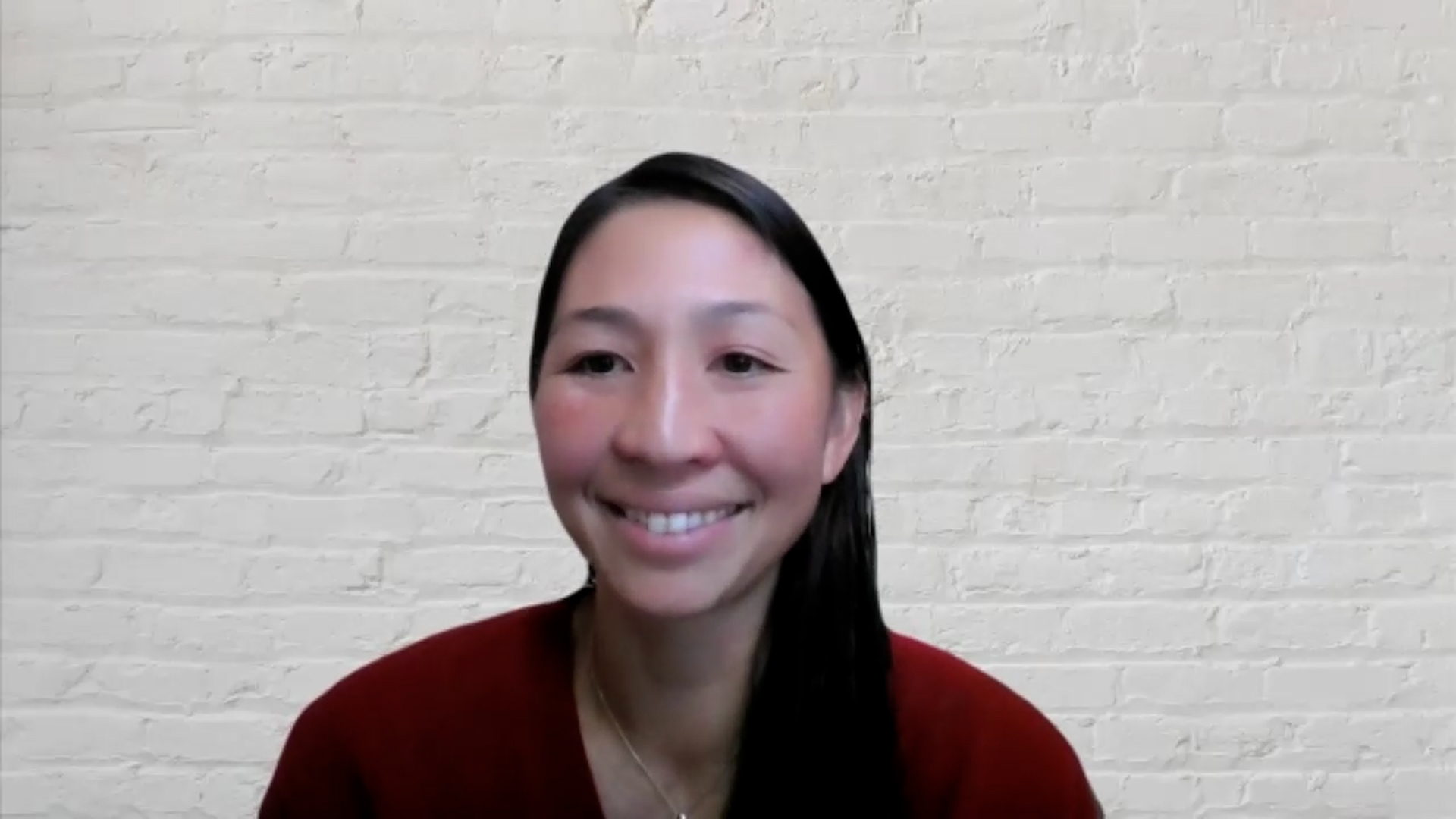
Icotrokinra is an investigational oral therapy that has shown promising early efficacy and safety in adults and adolescents with moderate-to-severe plaque PsO in the phase 3 ICONIC-LEAD study (NCT06095115). At EADV 2025 (held in Paris, France, 17–20 September 2025), we spoke with Dr Jennifer Soung (Santa Ana, CA, USA), who presented the longer-term clinical response and safety findings through week 52 of the ICONIC-LEAD study.
Q. What is the mechanism of action of icotrokinra, and how might an oral therapy like icotrokinra benefit patients?
Icotrokinra (ICO) is a first-in-class, targeted oral peptide that selectively binds to the IL-23 receptor, thereby inhibiting the IL-23 pathway signalling. The suffix “kinra” actually refers to the blockade of the receptor.
The role of IL-23 as a therapeutic target in psoriasis is well established, with excellent efficacy and a favourable safety profile. However, there are still many patients living with moderate-to-severe psoriasis who remain untreated. One possible contributing factor is patient preference for oral therapies over injections. As such a highly effective and safe oral agent targeting the IL-23 pathway could potentially level up treatment options for our patients and improve treatment uptake.
Q. Could you give a brief overview of the design and inclusion criteria of the ICONIC-LEAD trial?
The ICONIC-LEAD trial was the pivotal phase 3 trial that enrolled almost 700 patients living with moderate-to-severe plaque PsO. The eligibility criteria were typical of a phase 3 plaque PsO trial: patients were required to have had plaque psoriasis for ≥26 weeks, with ≥10% body surface area involvement, a PASI score ≥12, an IGA score ≥3, and to be candidates for phototherapy or systemic therapy.
A unique component of this trial was the inclusion of adolescents alongside adults. Typically, plaque psoriasis therapies are first investigated in adults and only later in adolescents; however, in ICONIC-LEAD, patients aged ≥12 years were eligible for enrollment from the outset. This approach could be a game changer for adolescents, many of whom often really dislike injections and prefer oral treatment. Notably, this is also the first time a systemic therapy is being submitted for FDA approval with concomitant adult and adolescent data.
Q. How has icotrokinra performed in terms of safety in the ICONIC-LEAD trial?
The safety data from ICONIC-LEAD were first reported alongside the primary endpoint results at week 16 during the American Academy of Dermatology (AAD) Annual Meeting, held on 7–11 March this year in Orlando, Florida. These data demonstrated that icotrokinra has an excellent safety profile and was associated with improved skin response rates. At the EADV 2025 Congress, we reported sustained clinical responses in patients through 52 weeks, along with safety findings in both adults and adolescents. The safety profile remained favourable and consistent from week 16 to week 52, with no new safety signals observed. Specifically, there were no serious infections or malignancies (incidence <1%) and no cases of active tuberculosis; findings which are consistent with the IL-23 inhibitor class of medications.
Q. Could you describe the randomized withdrawal analysis you presented at EADV?
The presentation I gave at EADV 2025 focussed specifically on reporting maintenance of ICO’s clinical response in patients. We evaluated two populations, beginning with adults who received ICO 200 mg once daily for 24 weeks. At week 24, responders were defined as patients achieving ‘clear’ or ‘almost clear’ skin or a PASI 75. These responders were then re-randomized to either continue ICO 200 mg daily or switch to placebo, allowing assessment of randomized withdrawal from week 24 to week 52 in adults
The second population analyzed were adolescents, who continued ICO daily without interruption. Finally, safety outcomes were assessed across both adult and adolescent populations.
Q. What were the findings regarding durability of response with icotrokinra?
What we saw with an oral IL-23 targeted therapy was that over the 52 week period, there were high levels of maintenance of response. Almost 90% of patients continuing ICO 200 mg daily from week 24 to week 52 achieved a PASI 75, with 84% of patients achieving a PASI 90. Interestingly, when you look at the other group, the randomized withdrawal group who discontinued ICO, it took almost 17 weeks for half of these patients to lose their PASI 75. In other words, that means that the other half of the patients maintained their PASI 75. If you look at even higher skin responses, PASI 90, we see that it took half the patients 10 weeks to lose their PASI 90 response, meaning that the other half of the patients maintained their PASI 90 response.
When reviewing the adolescent data, the results are remarkable. This is the first time 100% of the patients, I am referring to the adolescents who continued ICO 200 mg daily through week 52 and had no interruptions, achieved a PASI 75 by week 32 and then continued to maintain a response within the mid-90th percentile through week 52. When we look at whether it is IGA 0 or PASI 90, 90% of these patients are maintaining ‘clear’ or ‘almost clear’ skin through week 52.
Q. What are the implications of these findings for long-term disease control?
This is a really different and highly effective oral therapy that not only has excellent primary endpoint results, but also a maintenance of results. An oral medication with high efficacy paired with favourable tolerability and a strong safety profile, I think can offer more patients an option for managing their moderate-to-severe plaque PsO. I’m excited, I think icotrokinra is going to level up the treatment options for psoriasis.
More about Dr Jennifer Soung
Dr Jennifer Soung is a board-certified dermatologist and Director of Clinical Research at Southern California Dermatology, Santa Ana, CA, USA. Her clinical focus is on medical dermatology and chronic autoimmune skin diseases, with a strong interest in diverse skin tones and improving healthcare access in underserved communities. Dr Soung serves as Clinical Faculty at Harbor–University of California, Los Angeles, and sits on the Medical Board of the National Psoriasis Foundation.
Associated abstract Soung J. Maintenance of Response With Icotrokinra, a Targeted Oral Peptide, for the Treatment of Moderate-to-Severe Plaque Psoriasis: Randomized Treatment Withdrawal in Adults (Weeks 24-52) and Continuous Treatment in Adolescents (Through Week 52) From the Phase 3, ICONIC-LEAD Trial. Presented at European Academy of Dermatology and Venereology Congress 2025; September 17-20, 2025; Paris, France.
Disclosures: Jennifer Soung has served as a speaker, consultant and/or investigator for AbbVie, Alumis, Aslan, Amgen, Arcutis, Bristol Myers Squibb, Boehringer Ingelheim, Dermavant, Eli Lilly, Galderma, Incyte, Johnson & Johnson, KoBio Labs, LEO Pharma, Novartis, Ortho Dermatologics, Pfizer, Regeneron, Sanofi and UCB.
This content has been developed independently by Touch Medical Media for touchDERMATOLOGY. It is not affiliated with the European Academy of Dermatology and Venereology (EADV). Views expressed are the speaker’s own and do not necessarily reflect the views of Touch Medical Media.
Cite: Icotrokinra sustains clearance at 1 year, reinforcing potential as oral therapy for plaque psoriasis. touchDERMATOLOGY. September 25, 2025
Editors: Gina Furnival & Victoria Jones