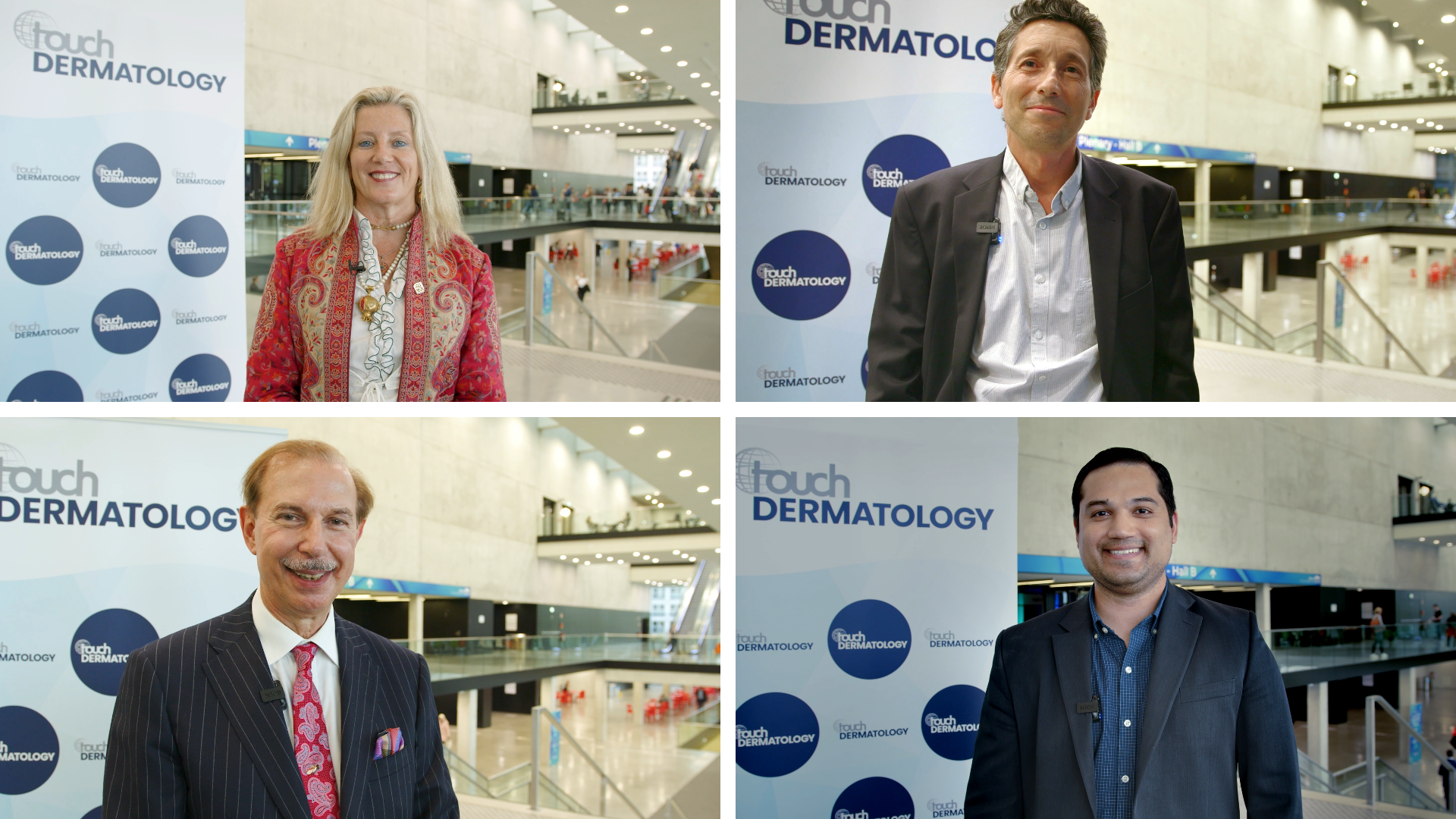
Prof. Viktoria Eleftheriadou discusses emerging therapies, combination strategies, and why severity must be assessed beyond body surface area alone.
The treatment landscape for vitiligo is undergoing significant change. Recent therapeutic advances, the potential introduction of oral therapies, growing interest in combination strategies, and new efforts to better define disease severity are all shaping how vitiligo may be managed in the future.
In this expert interview, we speak with Prof. Viktoria Eleftheriadou (Vitiligo Clinical and Research Centre, Royal Wolverhampton NHS Trust, Wolverhampton, England) following her session, New horizons in vitiligo: oral JAKs, combination strategies and consensus updates. The session formed part of the Hot Topics program at the British Association of Dermatologists (BAD) Annual Meeting, held from 28 June to 2 July 2026 in Manchester, UK.
Prof. Eleftheriadou discusses key take-home messages from her talk, including the latest developments in systemic treatment, the potential role of combination approaches in improving repigmentation outcomes, and insights from the international INTERCEPT consensus study, an initiative led by the Global Vitiligo Atlas (GLOVA) and the INTERCEPT study (INTERnational Consensus on definition of sEverity and relaPse in viTiligo).

Q. Could you summarize the current vitiligo treatment landscape and the unmet needs that remain?
In recent years, the treatment landscape for vitiligo has changed considerably, bringing new and potentially promising options for patients.
From a UK perspective, the approval of topical ruxolitinib as the first licensed treatment for vitiligo, and its availability on the NHS, represents a major step forward and a hugely important win for patients.
However, whilst this approval marks an important milestone, there are still practical questions around how it should be used in real-world clinical practice. Many clinicians are asking how best to approach this in clinic, highlighting a clear educational need to support effective implementation from the outset.
It also does not solve all of the challenges. The cream will not be suitable for every patient, and there will be some patients for whom treatment does not work.
That is why we still need to be investigating other options, such as systemic therapies. Currently there are a number of oral drugs on the horizon that have recently completed late-stage trials and are expected to be submitted for regulatory approval, which is very exciting.
Overall, these developments represent a positive shift, and show that we are moving into a new era in vitiligo treatment.
Q. There have been some much anticipated developments in the oral JAK inhibitor space. What could oral JAK inhibitors mean for the future treatment of vitiligo?
There are currently three oral JAK inhibitors in development for vitiligo: upadacitinib, povorcitinib and ritlecitinib. Encouragingly, positive phase 3 topline results have now been reported for two of these investigational therapies.
Upadacitinib met the co-primary endpoints in two phase 3 studies in adults and adolescents with non-segmental vitiligo (Viti-Up 1 and Viti-Up 2), showing improvements in both total body and facial repigmentation at Week 48. Povorcitinib has also reported positive phase 3 results, with both studies meeting the primary endpoint for facial repigmentation at Week 52 (STOP-V1 and STOP-V2).
At this stage, we are still waiting to see the full published data, however, the fact that these studies have met their primary endpoints is an important signal for the field.
It is also encouraging that some of these studies include individuals aged 12 years and over. This is important because treatment options for children and adolescents with vitiligo remain very limited. At present, if topical treatments fail, the next step in treatment is often phototherapy. However, phototherapy can be very difficult for patients to access, particularly for children and young people who are at school, as well as adults who are working. Treatment often requires patients to attend hospital two or three times a week for several months, which may simply not be practical for many people.
This is where oral JAK inhibitors could potentially play an important role. They may offer a more practical systemic option for patients who do not respond adequately to topical treatments or who cannot access phototherapy.
For ritlecitinib, phase 3 studies have been completed, but topline results have not yet been released. Therefore for now, all three drugs remain investigational in vitiligo, but there is hope that licensing processes may begin in the near future.
Q. In your talk, you highlighted combination strategies for vitiligo. How might they improve repigmentation outcomes?
Combination strategies are a very important topic and one that clinicians are asking about more frequently, particularly whether topical ruxolitinib, the new topical JAK inhibitor cream, can be combined with light-based treatments such as phototherapy.
The simple answer, for now, is that we do not yet have enough data to support this approach in routine clinical practice. There are some smaller proof-of-concept studies suggesting that combining a JAK inhibitor with phototherapy may accelerate repigmentation, but we do not yet have robust evidence to show that this is safe and effective in the long term.
There are also important unanswered questions. For example, we do not know whether combination treatment simply speeds up the early phase of repigmentation, or whether it leads to better final outcomes over time compared with treatment alone.
So, at this stage, combination strategies are very interesting and potentially promising, but they remain experimental.
Q. What is the INTERCEPT study, and why is it important?
The INTERCEPT study addresses an important question that will become increasingly relevant as systemic treatments for vitiligo move closer to clinical use: who should be eligible for these treatments?
If systemic therapies are approved, clinicians, regulators and funders will need to understand which patients should receive them and at what point in the treatment pathway. Traditionally, systemic treatment has usually been reserved for more severe disease, but in vitiligo there has not been a unified definition of what ‘severe’ actually means. Until now, this has often been based quite arbitrarily on body surface area, for example whether around 20% of the skin is affected.
That is where the INTERCEPT comes in. We conducted a global, mixed-methods consensus study involving experts, including dermatologists, trialists, methodologists, nurses, psychologists, journal editors and researchers, as well as people living with vitiligo across five continents and 21 countries.
Importantly, the study included participants from diverse ethnic backgrounds and across a range of skin phototypes. This inclusion, particularly of people with skin of color, is important because vitiligo can be more visible in darker skin, and these groups have historically been underrepresented in clinical trials.
The ultimate aim of the study was to develop an internationally agreed-upon severity criteria for vitiligo, to define what mild, moderate and severe disease should mean in clinical practice.
Q. What are the key insights from the INTERCEPT consensus?
One of the key messages from the consensus is that severity should not be defined by body surface area alone. It should also take into account the psychological and emotional impact of vitiligo, as well as its effect on work and social life.
We propose a simple way to measure these factors, so that clinicians can better demonstrate when vitiligo is having a significant impact on a patient’s life. This will be important when making the case to funders and healthcare systems that certain patients should have access to systemic treatment in the future.
The approach is intended to be practical and adaptable globally, so that it can be tailored to different healthcare systems and local requirements. Once the extent of vitiligo has been assessed, clinicians can then use recommended criteria to consider whether a patient should be upgraded to a more severe category based on the wider impact of the disease.
As I mentioned earlier, this is important because, in future, it may help identify patients who should be eligible for systemic therapies. We know that many barriers to treatment still exist in both high- and low-income countries. Patients can often become stuck between rigid definitions, percentages and thresholds, even when clinicians can clearly see that the disease is having a major impact on their lives.
Ultimately, the consensus reinforces a more patient-centered approach, recognizing that clinicians are treating a person, not a number or a percentage of affected skin. We are treating a person who may need treatment because vitiligo is affecting their work, private life, family life, social life or cultural life.
Related paper: Eleftheriadou V, Desai S, Bae JM, et al. Definition of Severity and Relapse for Vitiligo: An International Consensus Statement. JAMA Dermatol. 2026;162(5):515–524.
In summary…
From our conversation with Prof. Viktoria Eleftheriadou, it appears that the next priority is likely to be to ensure that new treatments can be implemented effectively in clinical practice.
At the same time, the field needs more data on oral JAK inhibitors, combination strategies and long-term outcomes. If systemic therapies become available, it will be essential to define which patients should be eligible and how severity should be assessed beyond body surface area alone.
This is why consensus efforts such as INTERCEPT are so important. They help move the field towards a more patient-centered approach, where treatment decisions are guided not only by the extent of depigmentation, but by the real impact vitiligo has on a person’s life.
Disclosures: Viktoria Eleftheriadou has served as a consultant/speaker/investigator for Abbvie, Almirall, Incyte, MSD, Pfizer, L’Oreal, La Roche Posay, Beiersdorf, Galderma, Novartis, Boehringer Ingelheim and Genesis Pharma. VE is a Representative for the Executive Committee of the British Association of Dermatologists (BAD) and a member of the Research Sub-Committee of the BAD. Viktoria Eleftheriadou is the NIHR West Midlands RRDN Dermatology Specialty Lead. Viktoria Eleftheriadou is Co-Director of the Global Vitiligo Atlas (GLOVA)-a project of the International League of Dermatological Societies (ILDS).
This content has been developed by Touch Medical Media for touchDERMATOLOGY in collaboration with Prof. Eleftheriadou . It is not affiliated with the British Association of Dermatologists (BAD). Views expressed are the speaker’s own and do not necessarily reflect the views of Touch Medical Media.
Editor: Gina Furnival
Cite: Eleftheriadou V. New horizons in vitiligo care. TouchDERMATOLOGY. July 9, 2026
SIGN UP to TouchDERMATOLOGY!
Join our global community today for access to thousands of peer-reviewed articles, expert insights, and learn-on-the-go education across 150+ specialties, plus concise email updates and newsletters so you never miss out.