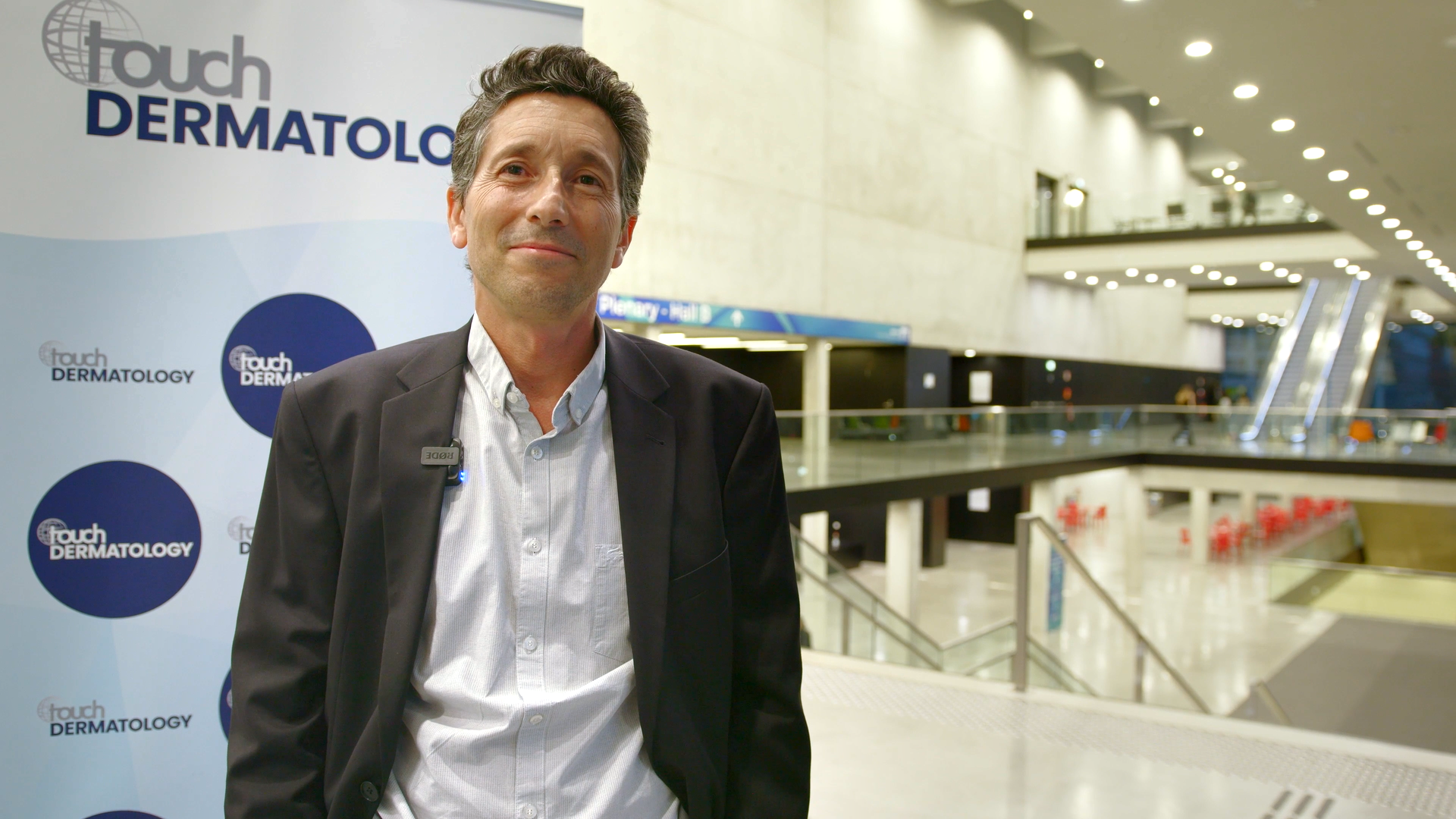
We are delighted to announce Dr Dennis Niebel as a touchDERMATOLOGY Future Leader 2026, selected for his contributions to immune-mediated skin disorders and sustainable dermatology.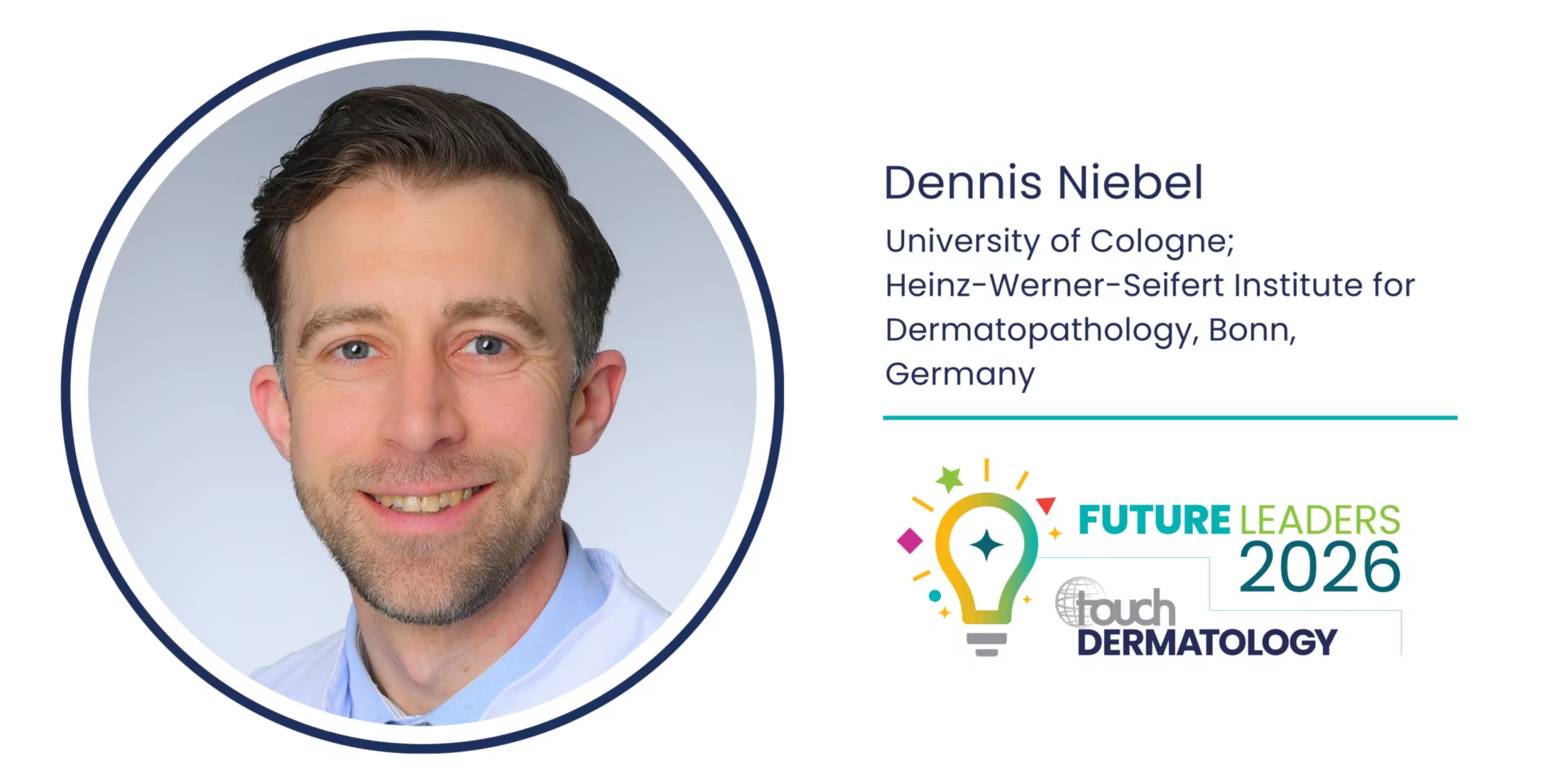
Germany-based Dr Dennis Niebel is a Lecturer and Consultant Dermatologist at the University of Cologne (Cologne, Germany) and a board-certified dermatopathologist at the Heinz-Werner-Seifert Institute for Dermatopathology (Bonn, Germany).
Dr Niebel specializes in chronic inflammatory skin diseases and cutaneous adverse drug reactions. His clinical and research interests range from cutaneous lupus erythematosus to psoriasis, atopic dermatitis, and related conditions.
Alongside his clinical and academic work, he is also a member of the European Academy of Dermatology and Venereology (EADV) Task Force on Climate and Pollution, with a particular interest in resource-efficient medical care. His recent research has also examined the environmental impact of dermatology services and product samples, as well as the potential relevance of microplastics to skin disease, helping to build the evidence base for more sustainable dermatological practice.
We are delighted to recognize his growing contributions to the field and highlight Dr Niebel as a touchDERMATOLOGY Future Leader 2026.
Q: What drew you to dermatology, and how did your interest in your current area of focus develop?
I had always been interested in internal medicine, and during medical school I came to appreciate that the skin is the most visible and readily accessible organ reflecting internal disease. This realization sparked my interest in dermatology. I subsequently completed an internship in Dermatology , where I discovered the extraordinary breadth of the specialty: from andrology to zoonotic diseases, from pediatric to geriatric patients, and from specialized topical and innovative medical therapies to surgical interventions.
Prof. Jean-Pierre Allam advised me early on that dermatology residency positions were highly competitive and that completing my final year clinical rotation in dermatology would be essential for anyone seriously considering a career in the field. I followed this advice and completed my Practical Year in Dermatology, an experience that ultimately confirmed my career choice and allowed me to start training in Bonn directly after finishing medical school.
Traditionally, the University of Bonn has been exceptionally strong in immunology, with internationally recognized expertise in allergology and clinical immunology through Prof. Thomas Bieber and Prof. Natalja Novak, as well as in immuno-oncology through Prof. Thomas Tüting and Prof. Jennifer Landsberg. Having finished a doctoral thesis in the field of pathology, I was very interested in dermatopathology and thus became fascinated early on by the intersection of immunology and dermato-oncologic therapy, particularly the emerging field of immune checkpoint inhibition, reflected in the skin biopsy specimens I was working on. This interest led me to pursue my own research projects in this area and has remained a central focus of my academic work ever since.
Q: Is there a specific patient, mentor, or experience that shaped your path in this field?
I vividly remember a pathology lecture given by my future doctoral supervisor, Prof. Ines Gütgemann, during which I was first introduced to the concept that the immune system is capable of recognizing and eliminating cancer cells, as well as to the therapeutic strategies designed to enhance this process. I continue to find this field profoundly fascinating, particularly the delicate balance between immune activation and immune dysregulation, including situations in which endogenous or treatment-induced immune overactivity can give rise to autoimmune diseases such as vitiligo.
My most influential mentors in dermatopathology have been and continue to be Prof. Jörg Wenzel, Prof. Michael Landthaler, Prof. Sigrid Karrer, and Prof. Erhard Bierhoff. Prof. Landthaler, in particular, has been a remarkable role model. Even after more than five decades in medicine, he still consults textbooks almost daily when faced with complex cases, exemplifying the true spirit of lifelong learning and continuous medical education.
One formative experience in my professional development was delivering my first oral presentation at a national scientific congress, the German Dermatological Society Annual Meeting in 2016. Although the audience was relatively small, I was quite nervous. Over the years, however, regular teaching activities, scientific presentations, speaker training programs, and medical education courses completed during my habilitation have enabled me to become increasingly confident as a presenter. Today, I greatly enjoy teaching and communicating medical knowledge. Looking back, I am grateful that stage fright did not prevent me from pursuing these opportunities.
After training in Bonn and board-certification in the field of dermatology and venereal diseases, I completed dermatopathology training and dedicated training for medicinal tumor therapies at Department of Dermatology in University Hospital Regensburg. I am very grateful to Prof. Mark Berneburg for his support that allowed me to finish my habilitation covering the field of dermatoimmunology and dermatopathology at University of Regensburg.

“Dermatology is currently one of the most innovative fields in medicine, and it is a privilege to be actively involved in the specialty at this exciting time. Diseases that saw little meaningful therapeutic progress for decades have now become major areas of scientific and clinical innovation.”
Dennis Niebel
Q: What current innovations in dermatology excite you the most?
Dermatology is currently one of the most innovative fields in medicine, and it is a privilege to be actively involved in the specialty at this exciting time. Diseases that saw little meaningful therapeutic progress for decades have now become major areas of scientific and clinical innovation.
Among the developments I find particularly exciting are:
- topical gene therapies (e.g. beremagene geperpavec)
- novel topical agents and innovative topical drug delivery formulations
- bispecific and trispecific cytokine-directed antibodies
- chimeric autoantibody receptor (CAAR) T-cell therapies for autoimmune diseases, as well as T-cell engagers.
These advances have the potential not only to transform patient outcomes but also to fundamentally reshape the way we think about the treatment of dermatologic and immunologic diseases in the years ahead.
Disclosures: This short article was prepared by touchDERMATOLOGY in collaboration with Dr Niebel. No fees or funding were associated with its publication.
Citation: Dr Dennis Niebel on the next generation of dermatological therapies: touchDERMATOLOGY Future Leaders 2026. touchDERMATOLOGY. XX September 2026.
Register now to receive the touchDERMATOLOGY newsletter!
Don’t miss out on hearing about our latest peer reviewed articles, expert opinions, conference news, podcasts and more.