Personalized and predictive dermatology recognizes that each patient is unique and aims to comprehensively address all aspects of an individual’s skin health. This approach tailors skin care treatments based on a combination of factors, including genetic and epigenetic profiles, skin type, microbiome composition and the exposome (an individual’s lifetime exposures).1
Scientists are exploring how ecological engineering of the skin microbiome might offer alternatives to current therapies like antibiotics, which eradicate both pathogens and beneficial microbes and may worsen dysbiosis and induce treatment resistance.2,3 In atopic dermatitis (AD), variations in the FLG and TSLP genes have been correlated with early disease onset and potential treatment needs.4
Microbiome composition analysis in AD has opened new avenues for tailored dermatologic treatments that target specific microbial imbalances. Topical applications of live biotherapeutic products to restore skin barrier integrity, nourishing formulas consisting of prebiotics and synbiotics ingested orally or applied topically to promote colonization of existing beneficial microbes, and the use of antimicrobial peptides or enzymes to provide anti-inflammatory benefits of microbes without the risks of live bacterial application are all key microbiome-targeted approaches in AD. Recurrent bacterial skin infections and lichenification are typically associated with moderate-to-severe AD. In response to these findings, personalized interventions targeting the skin microbiome have been developed.
An individual’s skin type and individual risk factors usually determine the dermatologist’s approach to the individual’s specific management. Artificial intelligence (AI) and teledermatology are now fully integrated tools in clinical practice. Together, they are tackling workforce shortages, speeding up skin cancer detection and expanding access to remote care for underserved populations.5 AI algorithms can improve diagnostic accuracy across diverse skin types when trained on inclusive datasets; however, current systems for skin cancer detection have shown bias due to training predominantly on lighter skin.6,7 BRAF V600E mutation analysis for targeted melanoma therapy, glucose-6-phosphate dehydrogenase (G6PD) deficiency screening before dapsone treatment, microbiome analysis in AD and HLA-Cw6 testing for response to ustekinumab in psoriasis are part of the personalized ‘4P’ model in dermatology developed by experts.1 This model allows individualized treatment strategies for patients with complex skin diseases. For AD, treatments are predicted using the patient’s personal microbiome signatures.
Personalized dermatology involves shared decision-making regarding treatment plans in low-resource areas or localities where there are limited specialized out-patient dermatology centers. Integration of AI tools such as Claude and FirstDerm AI are efficient digital tools that are being used to provide multimodal diagnostic support to dermatologists and residents in training. Claude’s ability to process high-resolution clinical images alongside patient history allows it to act as a second pair of eyes for busy clinicians. Research indicates that digital AI tools are especially efficient at surfacing rare conditions that a general practitioner might overlook in a remote triage setting. FirstDerm AI is a platform that assesses patient-uploaded skin images, analyzes them against thousands of verified dermatology cases and provides diagnoses to guide informed decisions. This editorial acknowledges the inherent limitations of large language models, including the risks of diagnostic inaccuracies or hallucinations, dataset bias, regulatory concerns and the need for continuous clinician oversight of AI tools. Teledermatology expands access to specialist consultations, especially in remote or underserved areas, and facilitates the management of skin conditions.8
AI dermatology algorithms require high-resolution, well-lit and well-focused clinical images to accurately identify lesions. Patients or frontline workers using older smartphones with low-quality cameras may risk incorrect AI assessments. Another significant barrier in underserved areas is unreliable connectivity due to poor broadband infrastructure, low bandwidth and high mobile data costs, which can delay or completely block access to real-time care. Persistent power outages interrupt internet routers, computer workstations and smartphone charging stations, cutting off remote nursing homes and rural clinics from smart AI diagnostics. Over-reliance on AI diagnostics poses serious ethical issues because of a lack of standardized guidelines, creating legal ambiguity regarding who is liable: the physician, the tech developer or the hospital when an AI diagnostic error occurs.
Teledermatology and AI may be used for patient triage to enhance workflow efficiency; e.g. Anthropic’s Claude for healthcare suite provides Health Insurance Portability and Accountability Act-ready tools that allow healthcare systems to integrate AI into their patient portals. In sorting urgency, AI has the potential to analyze incoming teledermatology requests faster to flag potentially malignant lesions or suspicious–looking moles for immediate human review while categorizing routine cases (acne or eczema) for standard scheduling. This extra scrutiny provides improved teledermatology services to previously underserved or resource-limited areas. Digital tools are being used by clinicians in patient communication to translate complex skin biopsy results or doctors’ notes into plain language for patients, improving health literacy and follow-up compliance.
For patients with rare skin conditions, geographic and socioeconomic challenges are compounded because they require specialized expertise that is often concentrated in urban academic centers. Additionally, systemic discrimination in healthcare delivery systems can result in differential treatment quality and access for marginalized populations.9
Mobile applications (Figure 1), such as CRUSE Control, developed for patients with chronic spontaneous urticaria, provide data on itch and wheal frequency. SkinVision and Scanoma apps also support patient engagement by enabling self-monitoring and reporting of suspicious or changing skin moles, promoting adherence to preventive measures and encouraging direct communication with healthcare providers.10
Figure 1: Mobile applications, AI and teledermatology
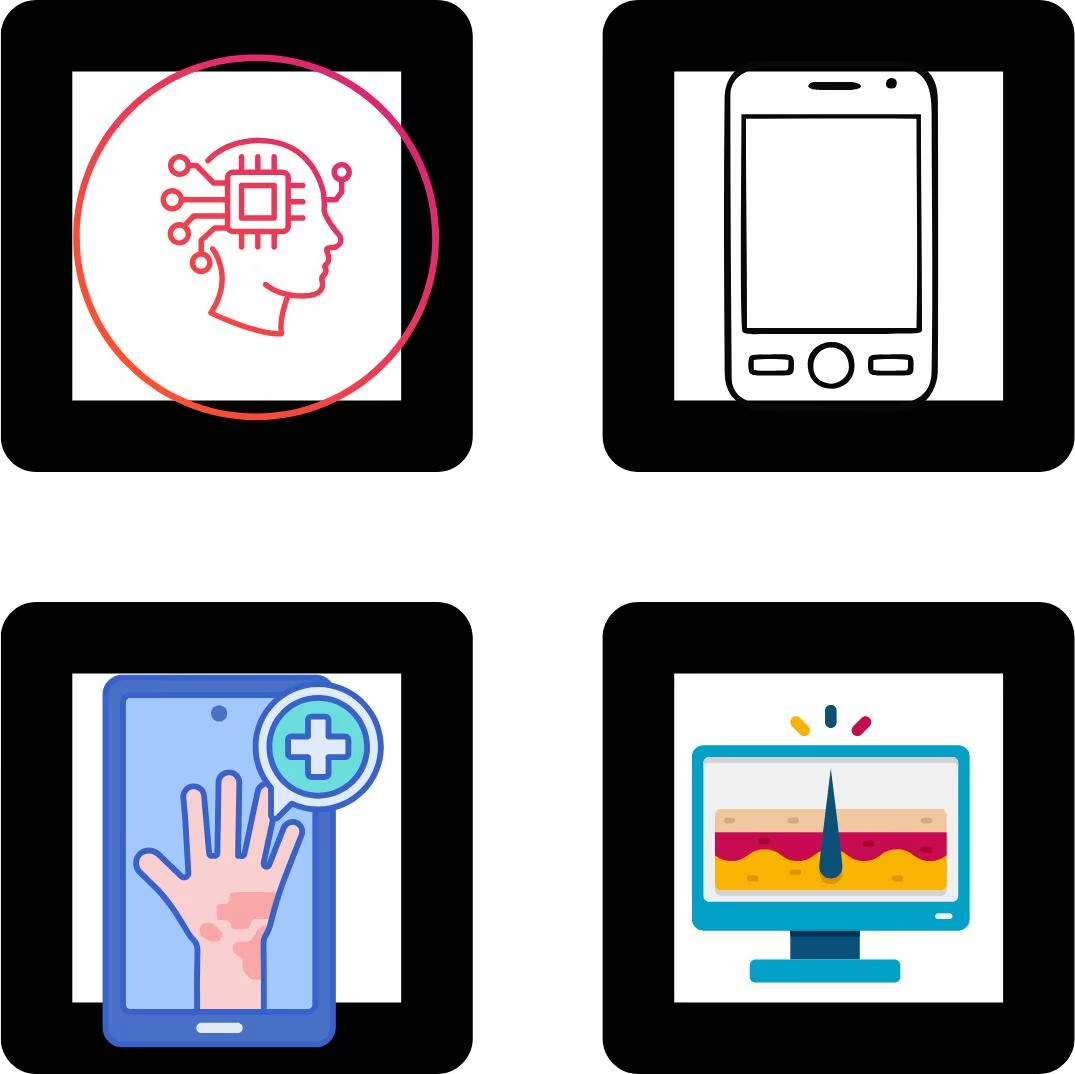
Red circle with human face and micro chip represents AI
AI = artificial intelligence
Conclusion
Integration of AI diagnostics may help improve clinical documentation by summarizing the patient’s history and the visual findings in electronic medical records. However, the future of AI in teledermatology relies on accurate, representative data, as a lack of diversity in data sets can lead to bias. More patients with complex skin diseases living in resource-limited areas can receive specialized care by using mobile applications such as CRUSE Control, Scanoma and SkinVision; however, geographic logistics in remote or rural areas, socioeconomic barriers, poor broadband infrastructure, low bandwidth and high mobile data costs can delay or completely block access to real-time care.
Teledermatology and artificial intelligence knowledge can shape the future of atopic dermatitis diagnostics, management and follow up in areas with with a history of poor access. Precision dermatology using the patient’s personal microbiomes signatures in these demographics can allow for clinicians, dermatologists reach and treat the patients who need their expertise.