Dr Melinda Gooderham shares her EADV 2026 highlights, including updates on JAKi , zasocitinib versus deucravacitinib, and ICONIC-TOTAL findings on icotrokinra in psoriasis.

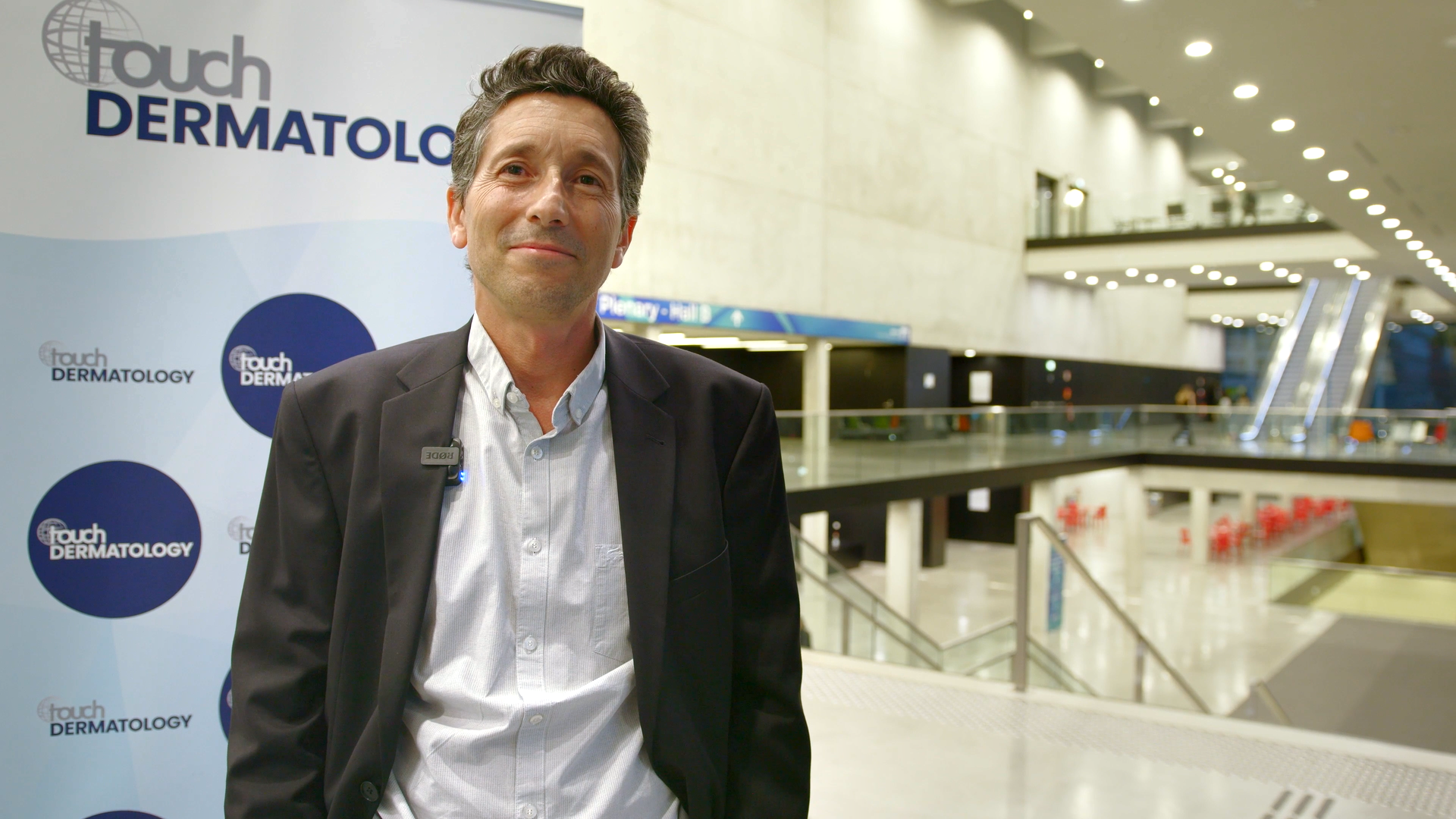
 Following the 2026 European Academy of Dermatology and Venereology (EADV) Congress in Vienna, we were delighted to catch up with touchDERMATOLOGY Editorial Board member, Dr Melinda Gooderham (SKiN Centre for Dermatology, Peterborough, Ontario, Canada). Having already discussed the late-breaking results from the phase 2 APEX (NCT06395948) trial evaluating zumilokibart in moderate-to-severe atopic dermatitis,1 Dr Gooderham shared her wider congress highlights.
We discussed key updates from the much-anticipated session on JAK inhibitors, which she co-chaired. The session attracted interest from healthcare professionals across dermatology, reflecting the growing use and investigation of these therapies in conditions including atopic dermatitis, alopecia areata, psoriatic disease, vitiligo, and hidradenitis suppurativa.
We also explored key psoriasis data, focusing on the head-to-head trial comparing zasocitinib with deucravacitinib and 2-year findings from ICONIC-TOTAL investigating icotrokinra for psoriasis affecting high-impact sites.2-3
Q. What were your key highlights from the JAK inhibitor session at EADV 2026?
Transcript: The room was packed, which I think really speaks to the interest in this field and how the number of new agents and new indications is really growing in dermatology. This is a medication that you are going to be using every day for your patients with different diagnoses. I started off the symposium by just talking about the mechanism of action, so people could understand the difference between a competitive inhibitor and an allosteric inhibitor, and how selectivity is relative for competitive inhibitors, just to understand the differences because we have multiple agents. Bruno Duarte then followed by talking about where it’s going, new indications and combination therapy, and highlighted that in 2020, we had no JAK inhibitors approved in dermatology, and now we have nine. So we’ve really come a long way in the past six years with new indications, most recently vitiligo being approved, but also a number of new drugs in alopecia areata – so that was an eye-opening development in our field. Turning to safety, Ignasi Figueras explained the ORAL Surveillance study and where the boxed warning comes in, based on the rheumatoid arthritis (RA) population. He then showed a lot of data about our patients living with alopecia areata, vitiligo and atopic dermatitis, and how they are a different patient population overall, and that we don’t have the same rates of adverse events (AEs). We don’t have that same signal in venous thromboembolism, major adverse cardiovascular events (MACE) or malignancy. So that is, I think, reassuring. Seemal Desai talked about long-term JAK inhibitor use, reviewing data on using these medications long term and highlighting that, with vitiligo, there’s a very slow response in comparison to something like atopic dermatitis, where we have improvement in itch within hours to days. With vitiligo, it’s a much longer treatment course, and we just need to be patient with those results. Also I’d like to add that from a safety perspective, the one thing that we do see in all of the different conditions treated with JAK inhibitors, is herpes zoster, and that’s a reminder to think about vaccination and have that discussion with your patient.
Q. Which findings or other sessions stood out to you at EADV 2026?
The whole oral revolution in psoriasis stood out to me. We have reached such high levels of skin clearance with current biologics, and I think the next wave is now these oral agents.
At the EADV 2026 Congress, we had late-breaking data from the LATITUDE Atlas trial comparing zasocitinib, a highly selective, once-daily oral tyrosine kinase 2 (TYK2) allosteric inhibitor, with the approved oral TYK2 inhibitor deucravacitinib in moderate-to-severe plaque psoriasis. This is the first time we have had a head-to-head comparison of two drugs with the same mechanism of action, so that was an exciting presentation for me.2
The study had a very high bar: a 100% improvement in the Psoriasis Area and Severity Index (PASI 100). What we saw was that, with zasocitinib, around one-third of patients achieved PASI 100 compared with about 13% with deucravacitinib. That is around two and a half times as many patients with clear skin at Week 16. PASI 90, indicating a 90% improvement, was achieved by two-thirds of patients with zasocitinib versus one-third with deucravacitinib.
What this showed was that, even though these two agents share the same target, with that higher affinity and higher selectivity, we are seeing greater responses with zasocitinib, but no difference in safety.
At the congress, late-breaking data were also presented on icotrokinra, specifically the 2-year data from ICONIC-TOTAL. This randomized controlled trial investigated the long-term durability and safety of icotrokinra in high-impact site psoriasis: the scalp, genitals, palms, and soles.
The 2-year results showed sustained responses across these high-impact sites. At Week 112, approximately three-quarters of patients achieved a scalp-specific Investigator’s Global Assessment (ss-IGA) score of 0 or 1, indicating absent or very mild disease. Approximately 90% achieved clear or almost clear genital skin based on the static Physician’s Global Assessment of Genitalia (sPGA-G), while approximately two-thirds achieved clear or almost clear skin on the hands and feet based on the hand/foot Physician’s Global Assessment (hf-PGA).
These were good results that continued to improve, with no new safety signals for this oral peptide targeting the interleukin-23 receptor.
Note: This transcript has been lightly edited to ensure clarity.
References:
- Silverberg JI, et al. Efficacy and safety of zumilokibart (APG777), a half-life-extended anti-IL-13 antibody, in moderate-to-severe atopic dermatitis: Primary results from the phase 2 APEX Part B dose-regimen-finding study. Presented at the European Academy of Dermatology and Venereology (EADV) Congress; September 30–October 3, 2026; Vienna, Austria
- Stein Gold, et al. (2026). Zasocitinib, a highly selective, once-daily oral TYK2 inhibitor, demonstrates superior skin clearance (PASI 100) versus an approved oral TYK2 inhibitor, deucravacitinib, and a consistent safety profile in moderate-to-severe plaque psoriasis: Results from a randomized phase 3 intraclass head-to-head trial (LATITUDE Atlas). Presented at the European Academy of Dermatology and Venereology (EADV) Congress; September 30–October 3, 2026; Vienna, Austria.
- Warren RB, et al. Long-term durability and safety of the targeted oral peptide icotrokinra for high-impact site psoriasis: 2-year findings from the ICONIC-TOTAL randomized controlled trial. Abstract LB-245. Presented at the European Academy of Dermatology and Venereology (EADV) Congress; September 30–October 3, 2026; Vienna, Austria.
Cite: EADV 2026 highlights with Dr Melinda Gooderham. touchDERMATOLOGY. October 22, 2026.
Disclosure: No funding was received for the publication of this content. Thank you to Dr Gooderham for sharing her expert insights. Dr. Melinda Gooderham discloses: Advisory board/panel fees from AbbVie, Amgen, Apogee Therapeutics, Arcutis Biotherapeutics, Bausch Health, Boehringer Ingelheim, Eli Lilly and Company, Galderma SA, Janssen, LEO Pharma, L’Oréal, Novartis Pharmaceuticals, Pfizer, Regeneron Pharmaceuticals, Sanofi Genzyme, Sun Pharmaceuticals, Takeda, UCB, and UNION Therapeutics. Consultancy fees from AbbVie, Amgen, Apollo Therapeutics, Arcutis Biotherapeutics, Bausch Health, Boehringer Ingelheim, Eli Lilly and Company, Janssen, Novartis Pharmaceuticals, Organon Canada, Sanofi Genzyme, Sun Pharmaceuticals, and UCB. Grants/research support from AbbVie, ACELYRIN, Alumis, Amgen, AnaptysBio, Apogee Therapeutics, Arcutis Biotherapeutics, Aristea Therapeutics, Attovia Therapeutics, Bausch Health, Boehringer Ingelheim, Bristol Myers Squibb, Dermira, Eli Lilly and Company, Galderma SA, GSK, Incyte Biosciences, Insmed, Jamp Pharma, Janssen, LEO Pharma, Meiji Seika Pharma, Merck, MoonLake Immunotherapeutics, Nectar Therapeutics, Novartis Pharmaceuticals, Organon Canada, Oruka Therapeutics, Pfizer, Q32 Bio, Regeneron Pharmaceuticals, Reistone Biopharma, Sanofi Genzyme, Sun Pharmaceuticals, Takeda, Tarsus, UCB, Ventyx, and Vyne Therapeutics. Speaker’s bureau fees from AbbVie, Amgen, Arcutis Biotherapeutics, Bausch Health, Boehringer Ingelheim, Eli Lilly and Company, Galderma SA, GSK, Jamp Pharma, Janssen, LEO Pharma, L’Oréal, Novartis Pharmaceuticals, Organon Canada, Pfizer, Regeneron Pharmaceuticals, Sanofi Genzyme, Sun Pharmaceuticals, and UCB.
Editor: Gina Furnival, Head of Content
touchDERMATOLOGY coverage of EADV 2026: This content has been developed independently by Touch Medical Media for touchDERMATOLOGY. touchDERMATOLOGY was an official media partner of the EADV Congress 2026. touchDERMATOLOGY is not affiliated with the EADV. Views expressed are the speaker’s own and do not necessarily reflect the views of Touch Medical Media.