RLS-1496, a topical GPX4 inhibitor, reduced actinic keratosis lesion counts by 49.2% compared with 13.7% on untreated forearms, with no application site reactions reported.

 The accumulation of senescent cells in the epidermis and dermis of photodamaged skin may contribute to the development of age-related skin diseases, including actinic keratosis (AK).1
RLS-1496 1% cream (Rubedo Life Sciences, CA, USA) is an investigational senotherapeutic treatment that selectively and potently inhibits the antioxidant enzyme glutathione peroxidase 4 (GPX4). It aims to target senescent cells, potentially offering a new approach to treating AK.2
Results from a phase 1b/2a, multicenter, open-label clinical study of RLS-1496 1% cream were presented during a late-breaking session at the European Academy of Dermatology and Venereology (EADV) Congress 2026.
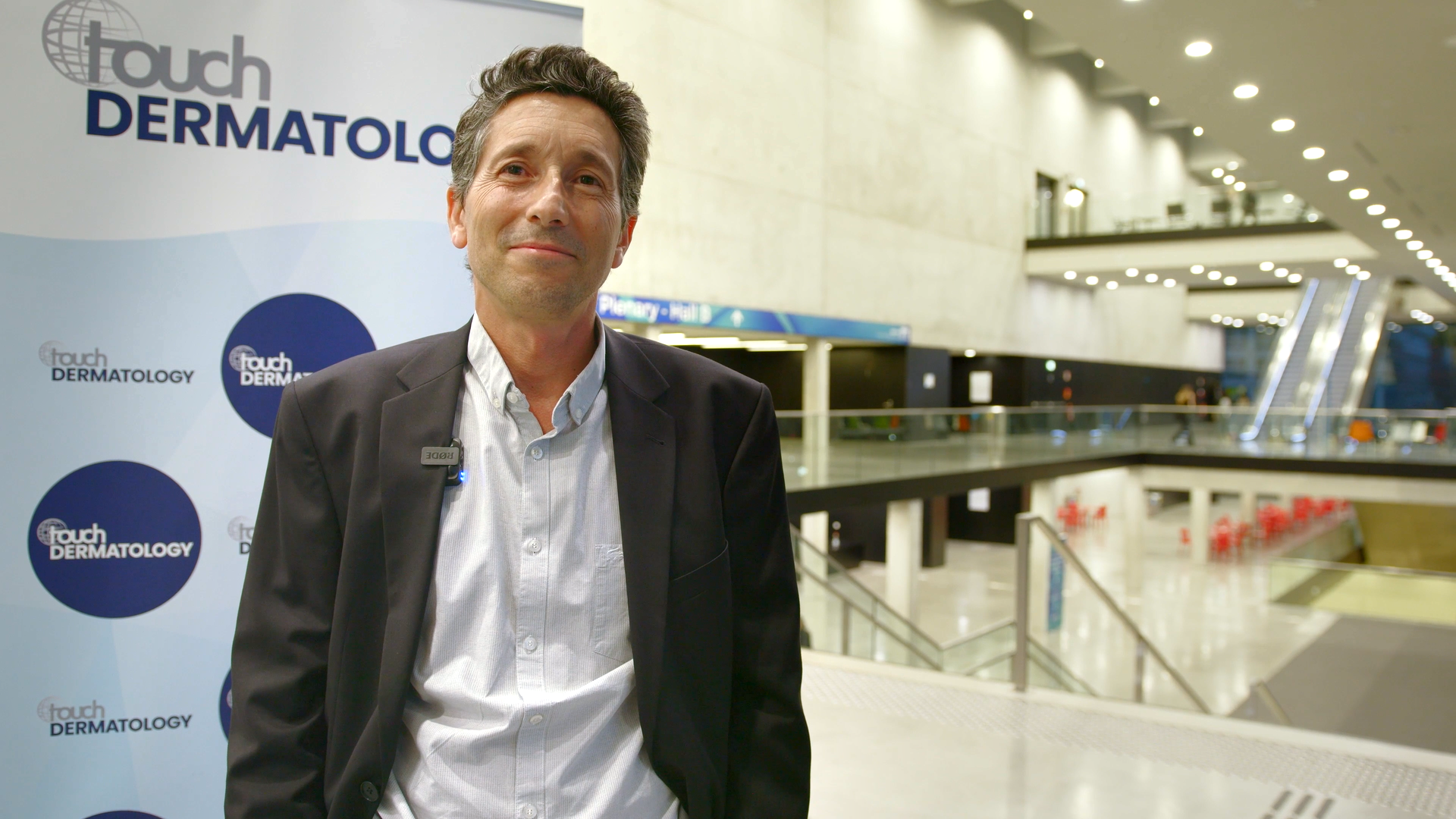
We spoke with Dr Mary Spellman (Rubedo Life Sciences, Inc.), who presented the findings, about the results and their implications for the future development of this investigational treatment.
Why are new treatments needed for actinic keratosis?
Actinic keratosis lesions are precancerous, and a proportion will progress to squamous cell carcinoma (SCC). We therefore need to monitor and treat these lesions.
There are many topical therapies available, but none offers a definitive cure, and their success in preventing future lesions remains limited. We can also treat lesions using destructive approaches, such as laser treatment or cryotherapy with liquid nitrogen. However, all of these treatments can cause some degree of irritation.
We need to continue investing in new therapies that address the underlying causes of AK, with the potential not only to treat existing lesions but also to help prevent new ones.
How is RLS-1496 thought to work in treating actinic keratosis?
RLS-1496 1% topical cream is an investigational first-in-class senotherapeutic treatment being evaluated in humans for the first time. It selectively and potently inhibits GPX4.
The treatment is designed to induce ferroptosis, a regulated form of iron-dependent cell death, in senescent cells. It is also designed to promote a therapeutic antioxidant ‘reset’ in stressed cells that have not yet become senescent through the nuclear factor erythroid 2-related factor 2 (NRF2) pathway.
Together, it is hoped that these effects can support skin repair and regeneration, potentially improving skin health and treating conditions such as AK.
What were the key findings from the phase 1b/2a clinical study of RLS-1496?
The clinical study involved 24 patients with AK lesions on both forearms. One forearm served as an untreated control, while the other was treated with RLS-1496. Each forearm was required to have four to 12 AK lesions within a defined area.
RLS-1496 1% cream was applied to the treated forearm once daily for 28 consecutive days, followed by a further 28 days of observation. The primary endpoints assessed adverse events through Day 57 and AK lesion clearance after treatment.
By Day 29, AK lesion counts had decreased by an average of 38.3% on treated forearms, compared with 5.2% on untreated forearms. By Day 43, these reductions had increased to 49.2% and 13.7%, respectively.
At least 75% lesion clearance was achieved on 25.0% of treated forearms at Day 29 and 34.8% at Day 57, compared with 0.0% of untreated forearms at both assessments.
The cream was generally well tolerated, with no reactions reported at the application site. One moderate episode of dermatitis occurred adjacent to the application site and resolved within a week. All other adverse events that emerged during the study were mild or moderate and considered unrelated to treatment. No serious adverse events occurred, and no participants withdrew because of an adverse event.
What are the next steps in evaluating RLS-1496 for actinic keratosis?
Could targeting cellular aging with RLS-1496 help treat other skin conditions?
Absolutely. RLS-1496 may also have a role in treating a range of other chronic skin conditions. These include inflammatory skin diseases, other types of precancerous lesions, photodamaged or photoaged skin, and androgenetic alopecia.
We are therefore exploring a number of potential indications to better understand the effects of RLS-1496 in these conditions.
Meeting information: This information was presented at the EADV Congress 2026, Vienna, Austria, September 30–October 3, 2026.
References:
- Spellman M, Lain E, Vitari A, et al. Clinical study of RLS-1496 topical cream: targeting senescence and oxidative stress via GPX4 inhibition in patients with actinic keratosis. Presented at: EADV Congress 2026, Vienna, Austria. 2 October, 2026. Abstr# 228.
- Rubedo Life Sciences, Inc. (May 28, 2026). Rubedo’s RLS-1496 reduces actinic keratosis pre-cancerous skin lesions by 46% at four weeks with minimal irritation in preliminary results of phase 1b/2a study [Press release]. https://www.businesswire.com/news/home/20260528143952/en
Cite: Topical RLS-1496 reduces actinic keratosis lesion counts. touchDERMATOLOGY. 13 October, 2026.
Disclosures: No funding was received for the publication of this content. Thank you to Dr Mary Spellman for sharing her expert insights. Dr Spellman is the Chief Medical Officer at Rubedo Life Sciences, Inc., CA, USA.
Editor: Gina Furnival, Head of Content
touchDERMATOLOGY coverage of EADV 2026: This content has been developed independently by Touch Medical Media for touchDERMATOLOGY. touchDERMATOLOGY was an official media partner of the EADV Congress 2026. touchDERMATOLOGY is not affiliated with the EADV. Views expressed are the speaker’s own and do not necessarily reflect the views of Touch Medical Media.