Dr David Rosmarin discusses new longer-term data from the phase 2b REZOLVE-AA trial presented at EADV 2026

Rezpegaldesleukin (REZPEG; Nektar Therapeutics, San Francisco, CA, USA) is an investigational interleukin-2 receptor agonist designed to selectively expand regulatory T cells (Tregs) and potentially restore immune tolerance in alopecia areata (AA).¹ This differs from the Janus kinase (JAK) inhibitors currently approved for AA, and is being investigated as a potential option for durable disease control in patients with severe to very severe AA.¹,²
REZOLVE-AA (NCT06340360) is a randomized, double-blind, placebo-controlled phase 2b trial in 92 adults with severe to very severe AA, defined as a Severity of Alopecia Tool (SALT) score of ≥50, who had not previously received a JAK inhibitor or biologic therapy.¹,³ Participants were randomized 3:3:2 to subcutaneous REZPEG 24 µg/kg (n=35), REZPEG 18 µg/kg (n=37), or placebo (n=20) every 2 weeks for 36 weeks. At Week 36, the 31 participants who had shown hair regrowth but still had a SALT score >20 were eligible for a blinded, 16-week treatment extension.¹,⁴
Topline Week 36 results, including the primary endpoint of mean percentage reduction in SALT score, were presented at the American Academy of Dermatology (AAD) Annual Meeting 2026.¹,⁵ At EADV 2026, the investigators presented data on continued treatment through Week 52, as well as on whether hair regrowth could be maintained after treatment stopped.⁴
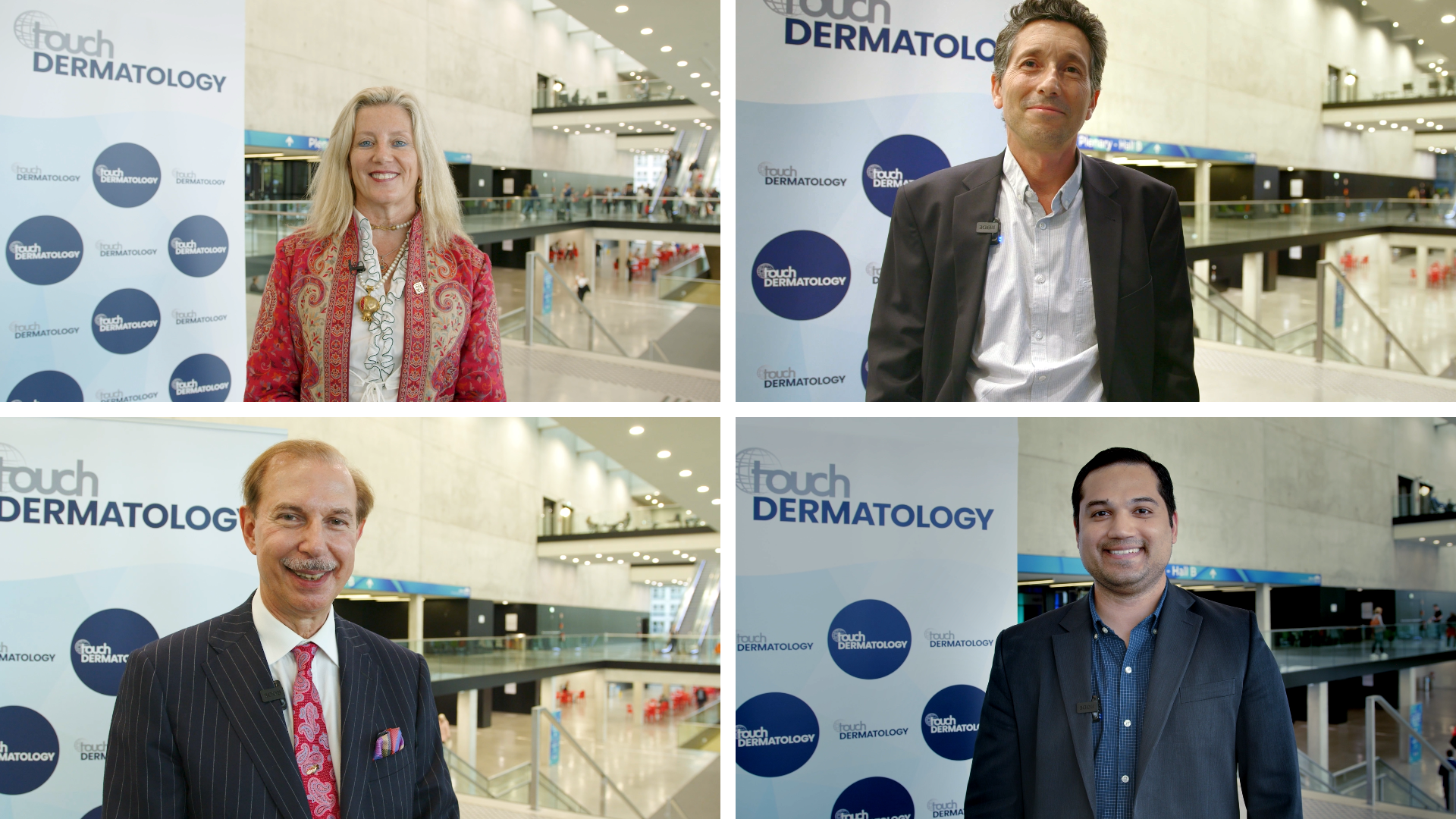
touchDERMATOLOGY spoke with Dr David Rosmarin (Indiana University School of Medicine, Indianapolis, IN, USA), who presented the Week 52 findings at EADV 2026, about the results and what they could mean for patients with AA.
New insights are added regularly, covering a broad range of subspecialties. Sign up below for free access to the latest clinical updates in your specialty!
Q. What did the results show about REZPEG’s efficacy?
The full 52-week results showed that efficacy continued to improve with extended treatment. Between Week 36 and Week 52, around 30% of patients in each REZPEG group achieved a new SALT score of 20 or less, compared with none in the placebo group.
Another striking finding was that response rates were similar regardless of whether patients’ current episode of AA had lasted less than or more than 4 years. That’s very different from what we’ve seen in the JAK inhibitor studies, where a longer current episode is associated with a poorer prognosis. The numbers are small, but it’s still very intriguing.
Another interesting aspect of this study is that when patients stopped treatment, most were able to maintain their hair regrowth. Some even saw a deepening response, continuing to improve 6 months after stopping treatment. That’s very different from what we see with JAK inhibitor therapy.
Q. What was observed in terms of safety and tolerability?
The safety profile remained favorable, with no new findings. Many patients have now been treated with REZPEG across different programs, including atopic dermatitis and psoriasis.
The most common side effect was injection site reactions, seen in about 90% of patients receiving REZPEG compared with around 30% receiving placebo. However, the vast majority were mild to moderate, and no patients discontinued because of them. They also tended to become milder over time, and usually resolved on their own within about 5 days.
Most importantly, we did not see serious adverse events. There were no cancer events, no signal for cardiovascular events, and nothing to suggest that laboratory monitoring would be needed. Overall, it’s a very reassuring safety profile.
Q. What are the key takeaways from these findings for clinical practice?
I think REZPEG has clear potential as a first-line option, especially for patients who are particularly concerned about safety. The favorable safety findings so far, and the possibility of avoiding routine laboratory monitoring, are especially appealing. That’s really where its potential lies as a first-line agent.
Q. What are the next steps in realizing the potential of REZPEG in AA?
The phase 3 program is planned to initiate in early 2027 and will include around 850 patients, adolescents as well as adults. I’m very hopeful that REZPEG will be the first biologic approved for AA, and that it will make a significant difference in how we treat the disease.
References
- Nektar Therapeutics. REZOLVE-AA phase 2b study of rezpegaldesleukin establishes proof-of-concept in patients with severe-to-very-severe alopecia areata. 2025. Available at: https://ir.nektar.com/node/22426 (accessed November 4, 2026)
- Domingues J, King B, Torres T. Alopecia areata: current and emerging therapies. Drugs. 2026;86:1599–618.
- ClinicalTrials.gov. A phase 2b study to evaluate rezpegaldesleukin (rezpeg) in the treatment of severe to very severe alopecia areata in adult patients (REZOLVE AA). ClinicalTrials.gov Identifier: NCT06340360. Available at: https://clinicaltrials.gov/study/NCT06340360 (accessed November 4, 2026)
- Rosmarin D, Ungar B, Mesinkovska N, et al. Rezpegaldesleukin, a novel regulatory T cell-inducing biologic, demonstrates efficacy and safety in severe-to-very-severe alopecia areata: 52-week results from the phase 2b REZOLVE-AA study. Presented at: EADV Congress 2026, Vienna, Austria, September 30–October 3, 2026. Abstr 1872.
- Nektar Therapeutics. Data from phase 2b REZOLVE-AD and REZOLVE-AA studies of rezpegaldesleukin presented at 2026 American Academy of Dermatology Annual Meeting. 2026. Available at: https://ir.nektar.com/node/22706 (accessed November 4, 2026)
- Nektar Therapeutics. New rezpegaldesleukin data supporting long-term durability and disease improvement in patients with alopecia areata and atopic dermatitis at EADV Congress 2026. 2026. Available at: www.biospace.com/press-releases/new-rezpegaldesleukin-data-supporting-long-term-durability-and-disease-improvement-in-patients-with-alopecia-areata-and-atopic-dermatitis-at-eadv-congress-2026 (accessed November 4, 2026)
Cite: Rezpegaldesleukin delivers further hair regrowth through 52 weeks in alopecia areata. touchDERMATOLOGY. 12 November, 2026.
Editor: Gina Furnival, Head of Content
Disclosures: No funding was received for the publication of this content. We thank Dr David Rosmarin for sharing his expert perspectives. Dr Rosmarin has received honoraria as a consultant for AbbVie, Abcuro, Ability Biologics, Aclaris, Almirall, AltruBio, Apogee, Arcutis, Arena, Astria, Boehringer Ingelheim, Bristol Myers Squibb, Celgene, Concert, CSL Behring, Dermavant, Dermira, Dualitas, Edesa Biotech, Eli Lilly, Eligo Bioscience, EMD Serono, First Tracks Biotherapeutics, Forte Biosciences, Incyte, Inmagene, Janssen, Kymera, Kyowa Kirin, Nektar, North Immunology, Novartis, Pfizer, Phothera, RAPT, Recludix, Regeneron, Revolo Biotherapeutics, Sanofi, Sun Pharma, Takeda, Triveni Bio, UCB, Viela Bio, and Zura Bio. He has received research support from AbbVie, Amgen, Bristol Myers Squibb, Celgene, Dermira, Eli Lilly, Galderma, Incyte, Janssen, Kymera, Merck, Nektar, Novartis, Pfizer, RAPT, Regeneron, and Zura Bio. He has served on data safety monitoring boards for Sun Pharma and Triveni Bio.
touchDERMATOLOGY coverage of EADV 2026: This content has been developed independently by Touch Medical Media for touchDERMATOLOGY. touchDERMATOLOGY was an official media partner of the EADV Congress 2026. touchDERMATOLOGY is not affiliated with the EADV. Views expressed are the speaker’s own and do not necessarily reflect the views of Touch Medical Media.