
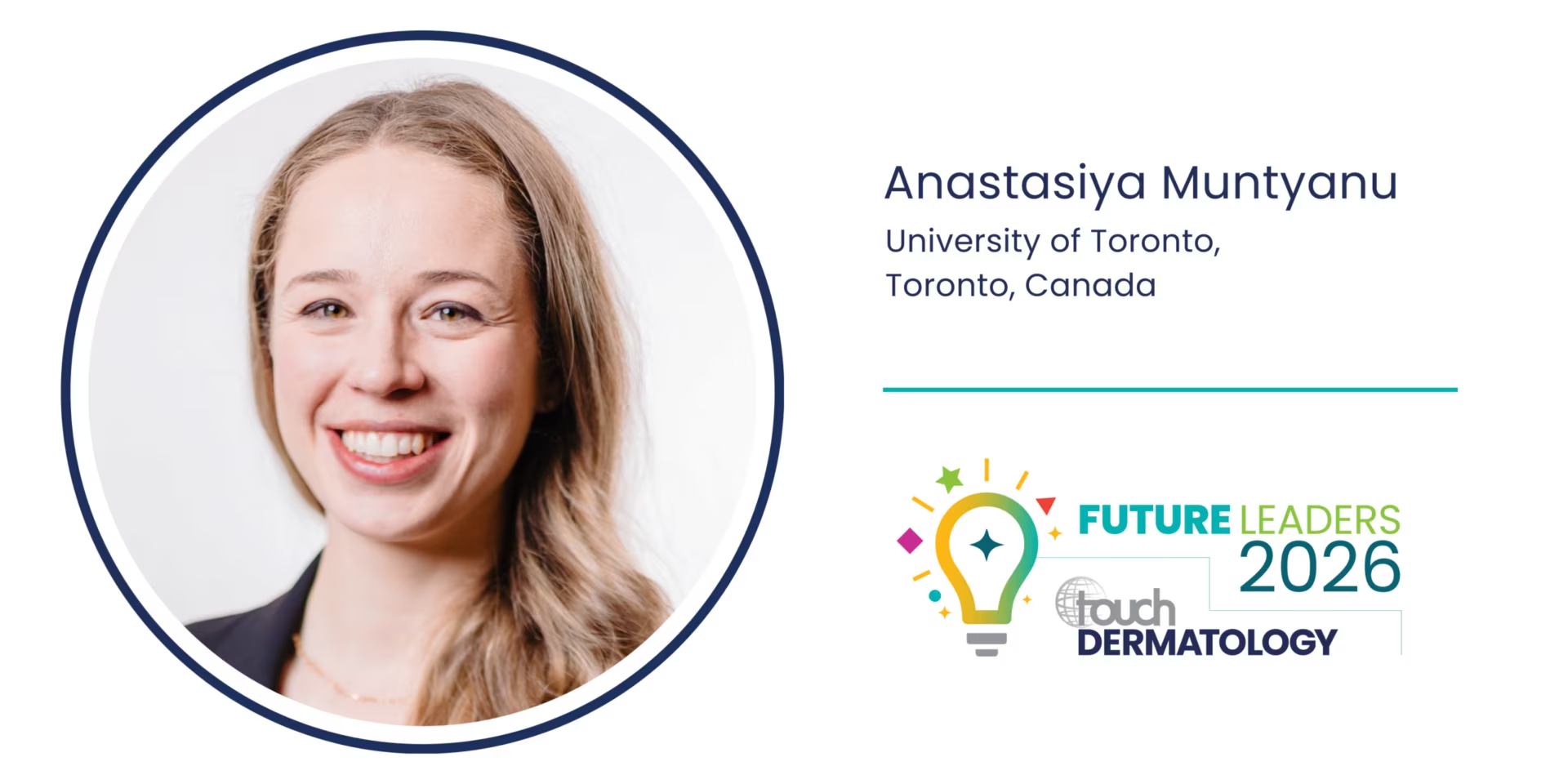
We are delighted to announce Dr Anastasiya Muntyanu as a touchDERMATOLOGY Future Leader 2026.
Based in Toronto, Canada, Anastasiya Muntyanu, MD, PhD, FRCPC, FAAD, is a Canadian and US board-certified dermatologist practising at the Women’s College Hospital and the Princess Margaret Cancer Centre, and an Assistant Professor at the University of Toronto.
Her clinical interests include psoriasis, atopic dermatitis, autoimmune connective tissue diseases such as systemic sclerosis, and the management of cutaneous adverse events associated with cancer therapies.
Dr Muntyanu earned her medical degree at the University of Ottawa and completed her dermatology residency at the University of Toronto. She also holds a PhD in Experimental Medicine from McGill University, where she studied environmental and occupational contributors to inflammatory skin diseases.
Dr Muntyanu has published in numerous peer-reviewed journals and presented her work at national and international conferences. She is also a co-investigator for national registries studying rare inflammatory skin diseases, including morphea and pyoderma gangrenosum. Her contributions have received recognition from the Canadian Institutes of Health Research, the Canadian Dermatology Association, and the American Dermato-Epidemiology Network.
Q: What drew you to dermatology, and how did your interest in your current area of focus develop?
I was drawn to dermatology by both the breadth of the specialty and the close relationship between the skin and systemic disease. Cutaneous findings can sometimes be the first sign of an underlying condition, prompting further investigation and enabling diagnosis and treatment before other manifestations become clinically apparent. I have always found this aspect of dermatology fascinating, and it naturally led to my interest in inflammatory and autoimmune skin diseases at the intersection of dermatology, rheumatology, and internal medicine. This interest deepened through clinical exposure and research during my training and remains central to my clinical and academic work today.
I also value the variety within dermatology. My practice spans medical, surgical, and cosmetic dermatology, giving me the opportunity to care for patients with a wide range of conditions. Skin disease is often highly visible and can profoundly affect a patient’s quality of life. Being able to effectively treat a condition that has affected someone’s daily life, confidence, or overall well-being, and to see the difference that treatment can make, is one of the most rewarding aspects of the field.
It is also an exceptionally exciting time to practice dermatology. Advances in our understanding of disease pathways are driving the development of more targeted therapies and transforming what we can offer patients. This combination of clinical breadth, connection to systemic medicine, rapid therapeutic innovation, and the opportunity to meaningfully improve patients’ quality of life is what continues to drive my passion for dermatology.
Q: Is there a specific patient, mentor, or experience that shaped your path in this field?
Rather than a single patient or defining moment, my path has been shaped by mentors at different stages of my training.
My first meaningful exposure to research began as an undergraduate student working with Dr Dafna Gladman, an internationally recognized leader in psoriatic disease. This experience introduced me early on to clinical research and showed me how questions arising from patient care can be explored through research.
My interest in dermatology grew during medical school, but it was during residency that my academic direction was truly shaped. I had the privilege of working closely with Dr Elena Netchiporouk and Dr Ivan Litvinov and ultimately completed my PhD in Experimental Medicine at McGill University within their research groups focusing on environmental and occupational triggers of skin disease. Their mentorship had a profound influence on my career, showing me how addressing important unanswered questions through research can translate into meaningful advances in patient care and inspiring me to pursue this in my own practice.

“To me, the future of dermatology is not only about developing better treatments, but also about understanding who develops disease, why they develop it, and how we can intervene earlier.”
Anastasiya Muntyanu
Q: What current innovations in dermatology excite you the most?
There are so many, which is part of what makes this such an exciting time to be in dermatology. I am particularly interested in our rapidly evolving understanding of the immunologic and molecular pathways that drive disease, and our growing ability to translate these discoveries into highly targeted therapies.
Atopic dermatitis is a great example. We increasingly recognize it as a heterogeneous disease, with different pathways in different patients and populations. As our understanding of this complexity grows, new therapeutic targets are emerging that may allow us to provide more effective options for patients who do not respond adequately to existing treatments. I am particularly excited to see similar advances extend to rarer and more challenging diseases, including fibrosing conditions such as morphea and systemic sclerosis, where treatment options remain limited and the impact on patients can be substantial.
Ultimately, I think the next frontier is personalized medicine: moving toward greater precision in treatment selection by using clinical and molecular biomarkers to identify which therapy is most likely to benefit an individual patient.
I am also very interested in moving further upstream, from treating established disease toward prevention. Much of my research has examined how environmental and occupational exposures, geographic variation, and neighborhood-level factors may influence the development and burden of skin disease. Better understanding of these determinants could help us identify people and communities at greater risk, address barriers to care, and ultimately develop interventions that prevent disease, reduce its severity, and improve access to care. To me, the future of dermatology is not only about developing better treatments, but also about understanding who develops disease, why they develop it, and how we can intervene earlier.
Disclosures: This short article was prepared by touchDERMATOLOGY in collaboration with Dr Muntyanu. No fees or funding were associated with its publication.
Citation: Dr Anastasiya Muntyanu on moving upstream from treatment to prevention in dermatology: touchDERMATOLOGY Future Leaders 2026. touchDERMATOLOGY. XX September 2026.
Register now to receive the touchDERMATOLOGY newsletter!
Don’t miss out on hearing about our latest peer reviewed articles, expert opinions, conference news, podcasts and more.