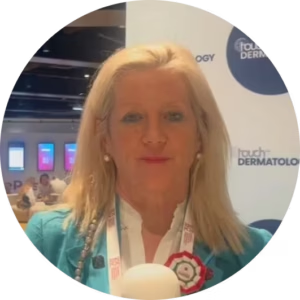
Prof. Dédée Murrell discusses the potential of existing drugs and targeted trial approaches to expand treatment options for rare genetic skin diseases.

 Developing a novel therapy for each identified rare diseases presents significant challenges. Small patient populations, limited understanding of disease biology, and the costs and timescales of development can create barriers.1,²,³
Drug repurposing, which identifies new uses for approved or investigational compounds, offers a potential alternative. By building on existing safety, pharmacokinetic, and manufacturing data, this approach may shorten development timelines and reduce costs.¹,⁴ It has already led to licensed treatments for some rare genetic diseases.⁵ However, repurposed drugs still require rigorous evaluation to establish their benefits and risks, while regulatory and intellectual property barriers can hinder investment.³
For rare genetic skin diseases, drug repurposing could offer opportunities to target downstream effects of genetic defects, such as inflammation. The Advancing Repurposed Therapeutics for Epidermolysis Bullosa (ART-EB) trial is one initiative exploring this potential in epidermolysis bullosa (EB).⁶
In this interview, recorded at the European Academy of Dermatology and Venereology (EADV) Congress 2026, we spoke with Prof. Dédée Murrell (St George Hospital, University of NSW, Sydney, Australia) following her presentation during the genetics session on repurposing drugs for rare diseases. We explore her thoughts behind the need for repurposing, discuss progress in this area, and consider how ART-EB, and trials like it, could help advance treatment for people living with rare conditions, such as EB.
Transcript: There are 7,000 rare diseases, and we know the genetic basis of these genodermatoses in 80% of cases, but only 7% of them have approved treatments. Even if we can develop genetic therapies, the cost of doing so for these patients means that most of the world misses out because they’re too expensive. On the other hand, many of these genetic diseases have ongoing downstream pathway effects involving inflammation, where we do already have approved treatments that work and that are safe. These treatments, given time, become cheaper. Therefore, it’s quicker for pharmaceutical companies and easier for them to have trials done using existing and known to be safe treatments that are already approved and that clinicians are familiar with. If these treatments also work for rare diseases, they could offer a more affordable option. Repurposed treatments for genetic diseases are really at the beginning. There are some trials in progress at the moment in EB, including one involving a drug approved in Asian countries for arthritis, called diacerein. Currently it is given as a tablet, but it has been repurposed into a cream that is currently in a trial for EB, and hopefully it will be successful. There have also been other trials in EB, including one investigating losartan, a hypertension medication that can inhibit fibrosis. The phase 1/2 [REFLECT] trial in children with EB showed that it could improve or delay scarring, and it was very safe. It would be great if someone took that further to a phase 3 trial. Note: This transcript has been lightly edited to ensure clarity.Q. Why should we be looking more closely at existing drugs as potential treatments for genetic diseases?
Q. What progress has been made in repurposing drugs for rare genetic skin diseases?
The ART-EB programme
In our conversation, Prof. Murrell highlighted a development that could hold promise for people living with EB: the ART-EB trial. This will investigate whether drugs already used to treat more common skin conditions, such as psoriasis and eczema, can be repurposed to treat EB. Supported by LifeArc and DEBRA UK, the multimillion-pound trial is led by Dr Su Lwin, an academic dermatologist at King’s College London and Guy’s and St Thomas’ NHS Foundation Trust, London, UK.
In the first stage of ART-EB, Dr Lwin and colleagues will aim to better understand inflammation in EB through a process called immune profiling. They will group participants according to the patterns of cytokines driving their inflammation, rather than their genetic subtype. Based on these profiles, participants will then be matched with the existing treatment most likely to be effective for them.
You can learn more about ART-EB here.
References
- Roessler HI, Knoers NVAM, van Haelst MM, van Haaften G. Drug repurposing for rare diseases. Trends Pharmacol Sci. 2021;42:255–67.
- Israr J, Alam S, Kumar A. Drug repurposing for rare diseases. Prog Mol Biol Transl Sci. 2024;207:231–47.
- Fetro C, Scherman D. Drug repurposing in rare diseases: Myths and reality. Therapie. 2020;75:157–60.
- Pushpakom S, Iorio F, Eyers PA, et al. Drug repurposing: Progress, challenges and recommendations. Nat Rev Drug Discov. 2019;18:41–58.
- Altamura C, Saltarella I, Campanale C, et al. Drug repurposing in skeletal muscle ion channelopathies. Curr Opin Pharmacol. 2023;68:102329.
- King’s College London. (December 9, 2025). World’s largest drug repurposing trial to fast-track treatments for rare ‘butterfly skin’ disease [Press release]. https://www.kcl.ac.uk/news/worlds-largest-drug-repurposing-trial-to-fast-track-treatments-for-rare-butterfly-skin-disease
Cite: Drug repurposing to advance treatment for rare genetic skin diseases. touchDERMATOLOGY. October 28 2026.
Disclosure: No funding was received for the publication of this content. Thank you to Prof. Murrell for sharing her expert insights. Prof. Murrell discloses relationships with AbbVie, Almirall, Amgen, Amicus, Amryt, AnaptysBio, Arcutis, Arena, argenx, Aslan, AstraZeneca, BMS, Botanix, Castle Creek, Celgene, Chiesi, Dermavant, Dermira, Evelo Biosciences, Galderma, GSK, Incyte, Janssen, Kiniksa, Krystal Biotech, LEO Pharma, Lilly, L’Oréal, MedImmune, Merck, Nektar Therapeutics, Novartis, Ono Pharma, Palleon, Pierre Fabre, Pfizer, Principia Bio, RAPT Therapeutics, Regeneron–Sanofi, Rheacell, Roche, Sun Pharma, Takeda, and UCB.
Editor: Gina Furnival, Head of Content
touchDERMATOLOGY coverage of EADV 2026: This content has been developed independently by Touch Medical Media for touchDERMATOLOGY. touchDERMATOLOGY was an official media partner of the EADV Congress 2026. touchDERMATOLOGY is not affiliated with the EADV. Views expressed are the speaker’s own and do not necessarily reflect the views of Touch Medical Media.