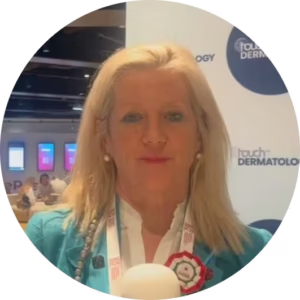
Prof. Dédée Murrell introduces the Women’s Dermatologic Society (WDS) and its focus on mentorship, alongside an overview of the WDS EADV 2026 session and why it is worth exploring on demand.

 The Women’s Dermatologic Society (WDS) session helped open this year’s European Academy of Dermatology and Venereology (EADV) Congress, bringing together expert faculty to discuss advances and emerging trends across medical dermatology.
Chaired by Dr Cheryl Rosen (Toronto Western Hospital, Toronto, Canada) and Prof. Dédée Murrell (St George Hospital, University of NSW, Sydney, Australia), the session featured short, 10-minute presentations from a selection of invited experts from across the globe covering new research and developments on topics ranging from blistering diseases and skin cancer to scarring alopecias, tropical diseases, and pediatric pigmentary disorders.
Following the session, we caught up with touchDERMATOLOGY Editorial Board member and session co-chair Prof. Dédée Murrell to learn more about the WDS, its session at EADV 2026, why it is worth watching if you missed it, and why you should consider joining the society.
The Women’s Dermatology Society, or WDS, was founded just over 50 years ago. It is an international organization headquartered in the USA, with branches and members in Europe, India, and South Africa. About 10% of its members are men, while the majority, as you would expect, are women. The main purpose of the group is to help younger people with their careers through mentoring, developing leadership skills, and supporting each other; it is a big family. It is one of the few organizations whose main focus is mentorship and career development, showing people how they can have a successful career, be a mother, and have a family life. This year’s meeting was packed out. Last year, when we held the meeting in Paris, it was also among the top 10 most popular sessions watched online after the meeting. Yesterday, we had stars of the WDS from around the world speaking on their areas of expertise, ranging from medical and cosmetic dermatology to pediatric dermatology, tropical diseases, and unmet needs. You can watch the session afterwards, and it will be very educational for you and your residents. Membership is free for residents and very inexpensive for others. International members can join as e-members. Most events take place at the American Academy of Dermatology (AAD) meeting. The society also holds an industry visioning meeting in the USA, separate from the AAD meeting. So, think about coming along when you attend the AAD meeting. Next year in Guadalajara, Mexico [at the 26th World Congress of Dermatology 2027 congress], we’re going to have a special leadership day for women held by the Women’s Dermatology Society the day before the meeting, as well as a big social event. So, join us. Note: This transcript has been lightly edited to ensure clarity.Transcript:
Q. What is the WDS?
Q. What were your highlights from the WDS session at EADV26?
Q. Why join the WDS?
Exploring the WDS session at EADV 2026
What could you take away from this year’s WDS session? This session is certainly one to watch. Below, we outline the key themes from each presentation, from diagnostic challenges to evolving treatment approaches, to help you choose what to explore on demand.
Blistering diseases in pregnancy
Prof. Aikaterini Patsatsi (Thessaloniki, Greece), co-chair of the EADV Blistering Diseases Task Force, opened this year’s WDS session at EADV 2026 with a focus on blistering diseases in pregnancy. She explored the recognition and diagnosis of pemphigoid gestationis, treatment escalation, and options for refractory disease. She highlighted the importance of early intervention and adequate treatment for pregnancy outcomes, before discussing neonatal pemphigus, planning for conception in patients with pemphigus, and other considerations for optimizing patient care.
Scabies update
Shifting the focus to scabies, Prof. Carmen Maria Salavastru (Bucharest, Romania), pediatric dermatologist and President-elect of EADV, explored advances in epidemiology, diagnosis, and management. She addressed challenges including the increasing burden of disease, institutional outbreaks, diagnostic difficulties, and treatment choices. Her presentation emphasized translating the latest evidence into clinical practice to support earlier diagnosis, more effective treatment regimens, and improved disease control.
Hedgehog inhibitors neoadjuvant treatment in skin cancer surgery
Reducing tumor burden before surgery is an important consideration in locally advanced basal cell carcinoma (BCC). Dr Stamatina Verykiou (Limassol, Cyprus) explored the role of Hedgehog inhibitors in this setting. She outlined current treatment options and the rationale for targeting the Hedgehog signaling pathway, alongside treatment limitations. Drawing on study data and cases from her own practice, she reviewed the evidence to date for vismodegib and sonidegib in BCC, before considering outstanding questions around treatment duration and dosing.
Update on bullous pemphigoid
Dr Snejina Vassileva (Sofia, Bulgaria), a leading expert in bullous diseases and an active contributor to the WDS and its journal, the International Journal of Women’s Dermatology, joined us for an update on bullous pemphigoid. She reviewed the epidemiology of this condition, which predominantly affects older adults, exploring its increasing prevalence in Europe and the possible reasons behind this trend. Her presentation covered typical and atypical presentations, including nonbullous pemphigoid, alongside potential drug triggers and established and emerging approaches to diagnosis and treatment. She also discussed advances in understanding disease pathogenesis, including the role of type 2 inflammation, and how these are informing emerging targeted therapies that could shape future management.
Managing scarring alopecias
Early recognition and intervention were central to the next presentation, as Dr Anastasia Therianou (London, UK), EADV Communications Committee member, explored the management of four scarring alopecias: frontal fibrosing alopecia, lichen planopilaris, folliculitis decalvans, and discoid lupus erythematosus. She discussed diagnostic features, disease monitoring, and treatment pathways, alongside emerging therapies and other considerations, emphasizing the need to halt progression before irreversible follicular destruction occurs. Her presentation also highlighted the importance of treating the whole patient, with symptom control, eyebrow involvement, camouflage, and cosmetic rehabilitation all forming part of successful management.
Neglected tropical diseases in 2026
Traveling from Santo Domingo, Dominican Republic, to join the session, Dr Mariel Amelia Isa Pimentel, Secretary General of the International League of Dermatological Societies (ILDS), explored the challenges facing neglected tropical diseases in 2026. She focused on chromomycosis, mycetoma, rhinoentomophthoromycosis, and leprosy, examining how climate change, geographical isolation, and limited access to healthcare contribute to the burden of these often underrecognized conditions. Through case studies, she reviewed developments and challenges in diagnosis and treatment, closing with a call for earlier recognition, improved diagnosis, stronger evidence, and better access to effective therapies.
Acquired pigmentary disorders in children
The WDS session concluded with Prof. Rashmi Sarkar (Noida, Uttar Pradesh, India), a pediatric dermatologist and longstanding WDS member, discussing acquired pigmentary disorders in children. She explored the causes of hyperpigmentation, covering conditions including erythema dyschromicum perstans, lichen planus pigmentosus, acanthosis nigricans, actinic lichen planus, and pellagra. Through case reports, she highlighted their clinical and histopathological features, diagnostic clues, helping attendees distinguish between conditions that can present with similar pigmentary change and ultimately the best management and treatment options.
From diagnostic challenges to emerging treatments, the WDS session offered practical learning across a broad range of dermatological conditions. Revisit the presentations on the EADV virtual on demand platform to explore the topics most relevant to your practice. For those interested in the society’s wider work, Prof. Murrell’s invitation also offers a reason to explore how WDS membership could support your career through mentorship, leadership development, and international connections.
Cite: The Women’s Dermatologic Society at EADV 2026. touchDERMATOLOGY. October 28 2026.
Disclosure: No funding was received for the publication of this content. Thank you to Prof. Murrell for sharing her expert insights. Prof. Murrell discloses relationships with AbbVie, Almirall, Amgen, Amicus, Amryt, AnaptysBio, Arcutis, Arena, argenx, Aslan, AstraZeneca, BMS, Botanix, Castle Creek, Celgene, Chiesi, Dermavant, Dermira, Evelo Biosciences, Galderma, GSK, Incyte, Janssen, Kiniksa, Krystal Biotech, LEO Pharma, Lilly, L’Oréal, MedImmune, Merck, Nektar Therapeutics, Novartis, Ono Pharma, Palleon, Pierre Fabre, Pfizer, Principia Bio, RAPT Therapeutics, Regeneron–Sanofi, Rheacell, Roche, Sun Pharma, Takeda, and UCB.
Editor: Gina Furnival, Head of Content
touchDERMATOLOGY coverage of EADV 2026: This content has been developed independently by Touch Medical Media for touchDERMATOLOGY. touchDERMATOLOGY was an official media partner of the EADV Congress 2026. touchDERMATOLOGY is not affiliated with the EADV. Views expressed are the speaker’s own and do not necessarily reflect the views of Touch Medical Media.